
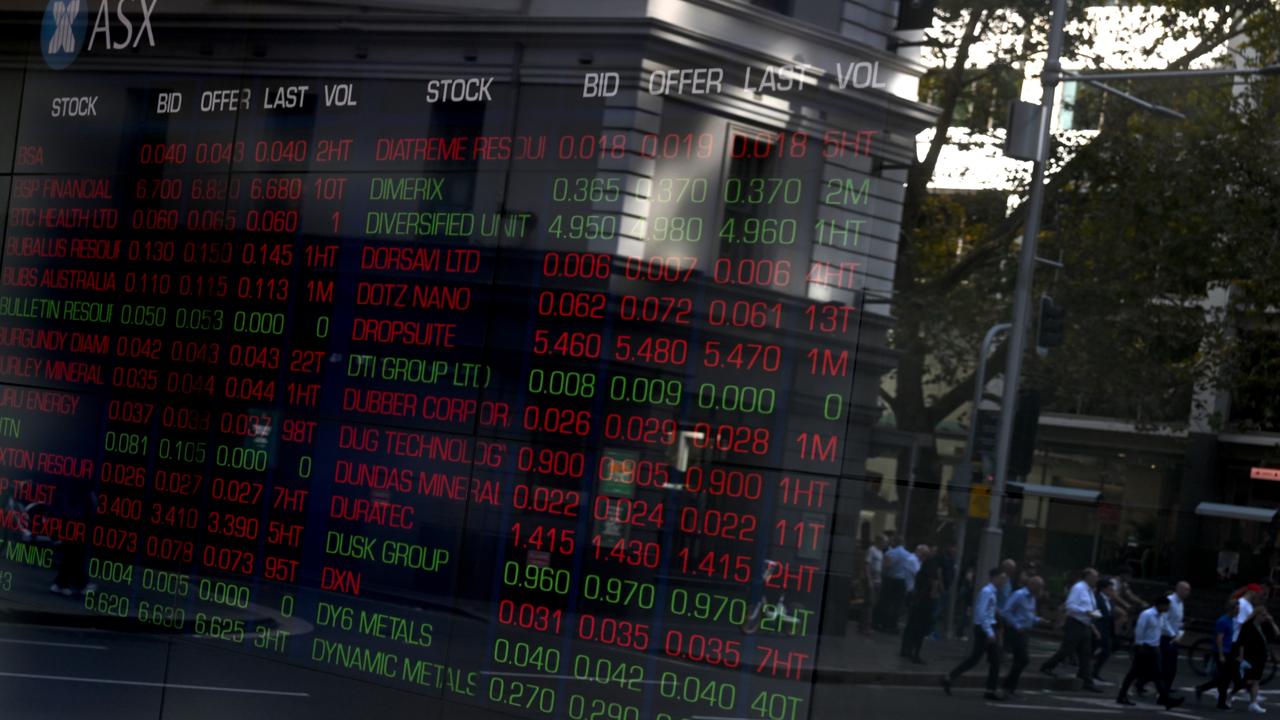
Oil prices have surged and Australian equities are again under pressure after a US plan to reopen the Hormuz Strait provoked a show of force from Iran, leaving a four-week ceasefire hanging in the balance.
The S&P/ASX200 fell 70.1 points by midday on Tuesday, down 0.81 per cent, to 8,627, as the broader All Ordinaries dipped 67.7 points, or 0.76 per cent, to 8,856.1.
Wall Street indices retreated from all-time highs overnight, after a US pledge to support ships stuck in the Strait of Hormuz sparked an escalation of tensions.
The US said it destroyed four small Iranian military boats and facilitated the passage of two commercial vessels through the waterway, while Iran struck a United Arab Emirates oil port that hosts a US military base.

“Tensions escalated in the Strait of Hormuz overnight as the US Navy began to implement ‘Project Freedom’,” Westpac economist Ryan Wells said.
“Brent oil prices bounced back 5.5 per cent, driving a sell-off in stocks and bonds as markets were left mulling the upside risks to inflation.”
Only energy and IT stocks were trading higher by lunchtime, with the ASX-listed tech sector improving on strong performances from segment giants WiseTech and Xero.
In energy, oil and gas giant Woodside did some heavy lifting, up 1.1 per cent to $32.46 as crude prices hit six-week highs, while Santos, coal producers and uranium stocks struggled to improve.
Refinery operators Viva Energy and Ampol carved gains of one per cent and 0.3 per cent, respectively.
The heavyweight financials sector was under pressure, slipping 0.9 per cent as all big four banks sold off ahead of a widely-tipped interest rate hike by the Reserve Bank later on Tuesday.
“Inflation was already proving sticky before the escalation of conflict in the Middle East, with price pressures evident across services, housing and food,” VanEck senior portfolio manager Cameron McCormack said.
“The recent spike in oil prices adds another layer of complexity, and we are yet to see the full impact flow through to headline inflation.”
Westpac fell the hardest, down 1.3 per cent to $38.01 after its $3.5 billion first-half net profit came in just one per cent higher compared to the same six months in 2025.
ANZ, NAB and Westpac have failed to shoot the lights out with their interim results, with Commonwealth Bank to hand down its third quarter update on May 13.
Basic materials stumbled one per cent lower in a broad-based sell-off led by major miners BHP, Rio Tinto and Fortescue, as investors mulled a gloomy global growth outlook.
Gold miners also slipped as the precious metal fell to five-week lows to trade at $US4,538 ($A6,339) an ounce, dragging the ASX gold sub-sector 1.2 per cent into the red.
Elsewhere, shares in travel group Flight Centre soared three per cent after it retained its 2026 financial cash profit guidance, despite industry headwinds.
The Australian dollar was buying 71.57 US cents, dropping from 71.97 US cents on Monday at 5pm.