

Ups and downs are a part of life and especially when it comes to your superannuation pool.
The past month has seen heightened volatility in financial markets, where much of Australians’ super is invested.
Some have seen their funds drop thousands of dollars since the US attacked Iran on February 28, creating a sense of panic.
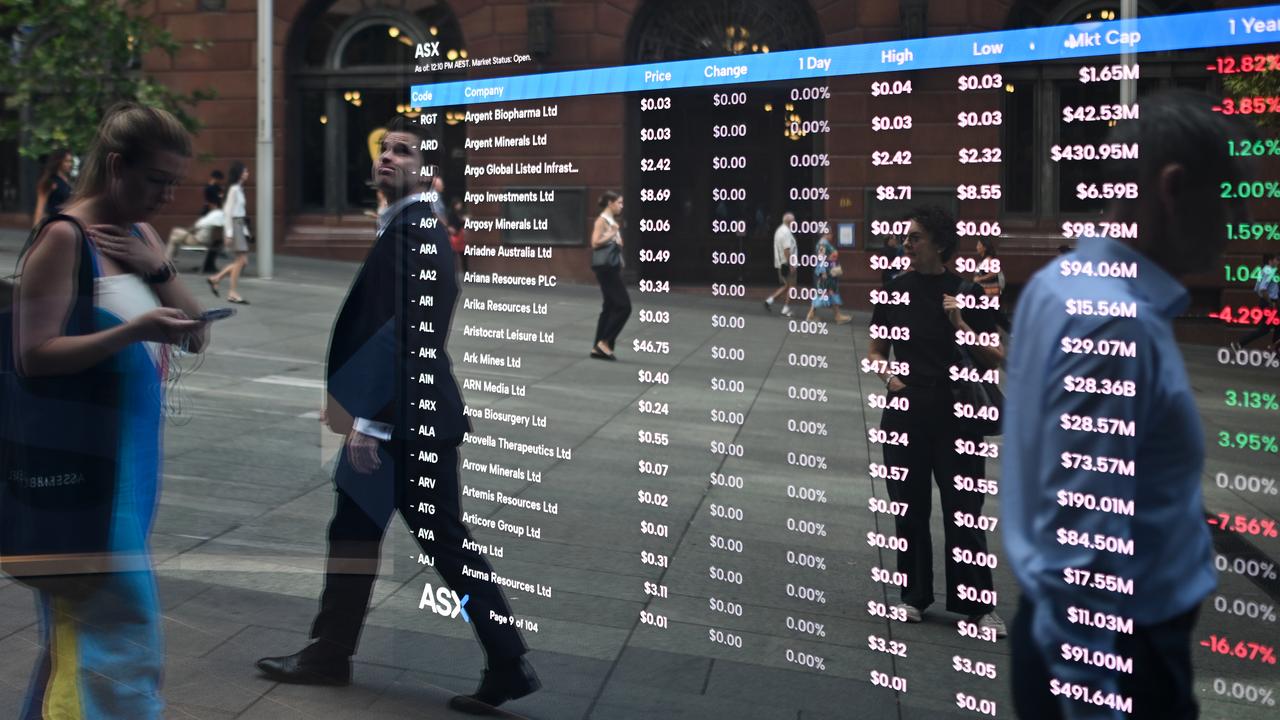
The nation’s largest super fund has noticed a sharp uplift in members switching their investment options to cash by around four times the usual rate since then, as members try to curtail losses.
“It’s a smaller amount than what we saw during the ‘Liberation Day’ period, which was almost a year to the day since but it is a larger amount than normal,” AustralianSuper head of asset allocation Alistair Barker told AAP.
On April 2 last year, US President Donald Trump declared a so-called Liberation Day as he announced shock tariffs on goods imported into America.
The markets lost about 20 per cent in a very short period, prompting about 11,000 AustralianSuper members – equivalent to 12 times normal – to move their accounts into cash.
AustralianSuper, which manages more than $400 billion in retirement savings in almost four million accounts, has noticed switchers tend to be men and those aged 40 or older – both tend to have higher balances
“It can happen across all ages but we’ve seen a particular increase in switching for people aged 40 and above, and we’re also seeing a higher rate of men … relative to women,” Mr Barker said.

At the same time, members with high growth accounts, which have larger exposure to shares, might be more vulnerable to switching than those in balanced options, which hold shares, infrastructure, fixed interest and cash.
“In periods of stress, the pattern of behaviour tends to be that people will move from one of those options, which has more exposure to shares, into something like cash,” Mr Barker said.
But super experts, including industry body Super Members Council, warn individuals have a poor track record of picking the market and that switching during volatility seals losses, with long-term impacts.
Take this example provided by Australian Super, with simplified projections assuming no further super contributions are made:
A member had a balance of $100,000 on Liberation Day last year and soon after, switched from a balanced option to cash.
Three months later, they were $8000 worse off.

A year on, those losses total $11,000 and the pool is still under $100,000 because they missed the recovery.
The potential difference in about 30 years is between $26,000 and $57,000, depending on whether and when they switched back.
“What this really highlights is that whilst people are quite concerned when markets are volatile, some of the largest upward movements in markets are often in the days immediately around difficult periods,” Mr Barker said.
“We saw one of those (during the week), with the announcement that there was a likely ceasefire between the US and Iran.
“Markets bounced quite considerably (the day after).
“They might be thinking they’re missing the down-days but they’re also missing the up-days, and those up-days are quite considerable immediately after events such as the ones we experienced this time last year and now.”
So, theoretically, is there a time to panic about the markets?
Broadly, no, because the industry says it runs on products designed to ride out periods of market volatility.
“In fact, probably the biggest risk that many Australians face is keeping pace with the cost of living,” Mr Barker warned.
* This is not investment advice. Always reach out to your superannuation fund or investment advisor to discuss your individual circumstances.