
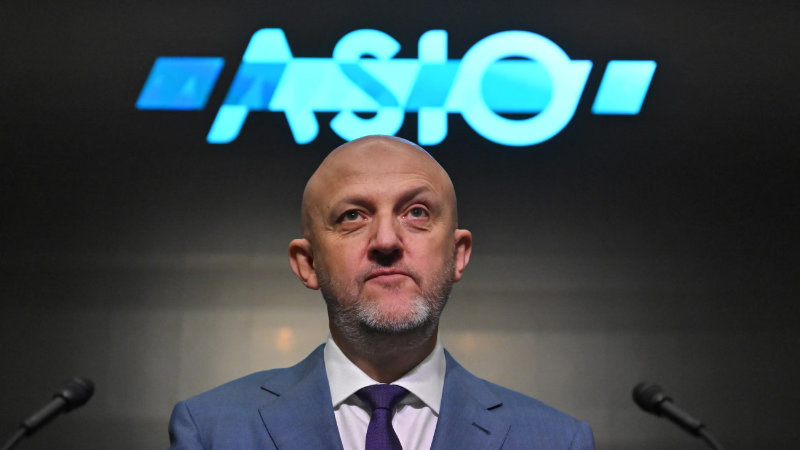
On Monday, ASIO issued a warning to the ABC about Four Corners running its second episode on the Bondi massacre. ABC ran it anyway. What did ASIO fear, Al the Writer asks?
When an intelligence agency threatens a broadcaster with legal action before a program airs, something is wrong. Either the program is genuinely defamatory, or the agency fears what will be revealed.
ABC’s Four Corners aired Monday night despite ASIO’s unprecedented pre-emptive warning.
On the program, former undercover agent “Marcus” claims he warned ASIO in 2019 that seventeen-year-old Naveed Akram was being radicalised by ISIS cell members. ASIO investigated for six months, then concluded he was no threat. However, it is now clear Akram’s links to multiple individuals should have raised red flags.
What to make of ASIO’s statement?
Misidentification?
ASIO’s statement is unequivocal: “The ABC’s source misidentified Naveed Akram. That is, the source claimed Naveed Akram said and did things that were actually said and done by an entirely different person.”
Whether ASIO means Marcus misidentified Naveed in a specific conversation or confused him entirely remains unclear. ASIO also says, “this source also has a track record of making statements that are untrue,” although it is unclear whether ASIO is referring to ‘Marcus’, their own operative, or someone else.
However, there is possible evidence contradicting claims that ‘Marcus’ did not know who Naveed Akram was. As reported by MWM, Wisam Haddad himself, the network’s so-called ‘spiritual leader’, stated in a now deleted post that there was video footage of Marcus and Naveed together.
The 2022 YouTube link has subsequently been removed, but evidence, including a spelling mistake, suggests it existed.
Warnings of ISIS links ignored. The anatomy of the Bondi attacks
Haddad is the last person who would benefit from making this claim, alleged well before this latest Four Corners episode. If Haddad knows his own network, and he confirmed they were together, the misidentification claim seems misplaced. Critically, this suggests ASIO operatives may have been surveilling Naveed Akram well beyond 2019.
Semantics
ASIO states: “We assessed (Naveed) did not adhere to or intend to engage in violent extremism at that time. Having reviewed all available intelligence,
we stand by our assessment at that point in time.
This appears to be semantics. Nobody claims the Akrams were violent extremists in 2019. Both MWM and the ABC reported evidence that it looked like they had been radicalised and were consorting with what we now know were potentially violent extremists.
Coupled with gun licenses and trips to the Philippines, one would presume red flags should have risen. The issue isn’t whether ASIO knew in 2019 that there would be an attack at a Hanukkah event on that specific day. The issue is whether warning signs were ignored.
How close is too close?
ASIO also refutes the claim that Naveed was “a close associate” of known terrorists: “There is a significant difference between attending a prayer centre with a large gathering of people and being a ‘close associate’ of known terrorists.”
Is this splitting hairs? We have evidence of Naveed with multiple individuals charged with terrorism-related crimes or considered radical. How close is too close when there are multiple links to people potentially or of concern in different contexts?
Youssef Uweinat: A known associate who served nearly four years for grooming minors to launch attacks via Haddad’s AMDC. Uweinat acted as a youth leader at Haddad’s prayer centre and was photographed with an ISIS flag in August 2024, four months before Bondi.
Isaac El Matari declared himself ‘Australian commander of Islamic State’ and received seven years and four months for plotting to attack St Mary’s Cathedral and the American Embassy. The Othman Bin Affan Mosque confirmed Naveed attended a 2019 Ramadan retreat with El Matari, who was arrested in July 2019. Prime Minister Albanese confirmed that two people Akram was associated with in 2019 were charged and jailed.
Mr Ye Ye and the Street Dawah Network
In 2019 videos, seventeen-year-old Naveed Akram stood outside Bankstown train station preaching about Islam. The Street Dawah Movement confirmed Akram appeared in its videos “a few times” in 2019, according to The Australian ($), though claimed he wasn’t a member and none of its members knew him personally.
It’s difficult to determine who runs Street Dawah, but many affiliated with AMDC, including El Matari and others, were associated with Naveed’s Dawah activities.
Haddad operated a van street-preaching service, officially registered in 2022. Haddad’s Dawah Van Incorporated was registered as a charity but stripped of its charity status after the Four Corners episode aired. Among those associated with its governance is Mr Ye Ye, whom Four Corners described as a recruiter for Haddad’s more radical endeavours.
Perhaps ASIO’s classified intelligence vindicates their 2019 assessment.
But until they explain how all these independent sources corroborate what they claim is a misidentification, questions persist.
Fifteen families deserve answers about what was known, when it was known, and whether different decisions might have prevented this tragedy. The Royal Commission will determine if those answers exist.