

Cybersecurity company Palantir has won high-level Australian government security clearance despite concerns about its surveillance and complicity in the Gaza genocide. Stephanie Tran reports.
In November 2025, Palantir Technologies was assessed as meeting the protected level under the Australian Information Security Registered Assessors Program (IRAP). This protection is a key requirement for companies seeking to handle sensitive government information.
The assessment enables a broader range of Australian government agencies and commercial organisations to use Palantir’s Foundry and artificial intelligence platform, AIP.
In a statement, Palantir said the assessment was conducted by an independent third-party assessor in line with requirements set by the Australian Signals Directorate (ASD), and demonstrated its ability to meet “stringent national security and privacy standards”.
The company described Australia as an “important market”, saying the clearance would open “new opportunities” across the public and private sectors.
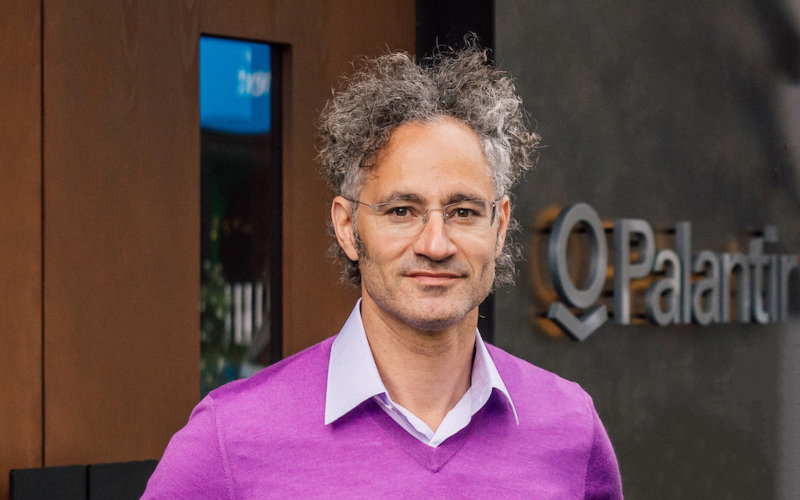
Alex Karp, Palantir CEO. Image: palantir.com
Mass surveillance without accountability
Palantir has been mired in controversy internationally over how its data analysis and AI tools are deployed by government and military clients, with experts warning that the company’s technology enables mass surveillance and data collection with limited accountability.
An ASD spokesperson stated that IRAP status should
not be interpreted as government approval or endorsement of a company’s broader conduct or use of data.
“IRAP assessments are third-party commercial arrangements between IRAP assessors (or companies offering ‘IRAP assessment’ services) and assessed entities,” an ASD spokesperson said. “ASD does not sign off or approve IRAP assessments.”
Lobbying push amid political pressure
Palantir’s expanded access to Australian government work comes amid growing political scrutiny. According to reporting by Capital Brief, in July 2025, the company hired lobbying firm CMAX Advisory, after the Greens called for an immediate freeze on government contracts with the company.
I want to talk to you about Palantir and its expanding footprint in Australia. TLDR: You should be worried.
This US surveillance tech company has secured multiple Defence contracts worth over $11 million. We need transparency about what data they’re accessing & why. 🧵
— David Shoebridge (@DavidShoebridge) July 7, 2025
CMAX Advisory was founded by Christian Taubenschlag, a former chief of staff to Labor defence minister Joel Fitzgibbon, who is a special counsel at the lobby firm. CMAX Advisory represents a number of major defence contractors, including EOS and Raytheon.
“Ambassadors of Truth”: Scott Morrison to speak in Israel as Gazans keep dying
Gaza, ICE and Coles
Palantir has faced sustained criticism globally over how its software is used by government clients.
In April 2025, CEO Alex Karp dismissed accusations that Palantir’s technology had been used to target and kill Palestinians in Gaza, saying those killed were “mostly terrorists”.
The UN Special Rapporteur on the Occupied Palestinian Territories, Francesca Albanese, has said there are “reasonable grounds” to believe Palantir has “provided automatic predictive policing technology, core defence infrastructure for rapid and scaled-up construction and deployment of military software, and its Artificial Intelligence Platform, which allows real-time battlefield data integration for automated decision-making”.
In the United States, Palantir has long worked with Immigration and Customs Enforcement (ICE). An investigation by 404 Media revealed that the company was developing a tool that generates detailed dossiers on potential deportation targets, maps their locations and assigns “confidence scores” to their likely whereabouts.
The company has also attracted attention in Australia for its work with private sector clients, including Coles, where they were hired to cut costs and “optimise” the company’s workforce.
“We kill enemies”
Karp has been blunt about Palantir’s mission. Speaking to shareholders and investors last week, he described the company’s purpose as helping the West “scare enemies” and, “on occasion, kill them”.
Karp also joked about “getting a drone and having light fentanyl-laced urine spraying on analysts that tried to screw us”.
Millions in government contracts
Despite the controversy, Palantir has quietly built a substantial footprint in Australia. According to Austender data, the company has secured more than $50m in Australian government contracts since 2013, largely across defence and national security-related agencies.
The 2024 financial report of its Australian subsidiary, Palantir Technologies Australia Pty Ltd, show $25.5m in revenue from customer contracts in 2024, though the company’s local financial reports are not audited.
In 2020, Palantir recommended that the Australian government consider “expanding the exemption from public access to disclosure documents”, arguing that filing financial reports with ASIC “is expensive” and “gives competitors access to confidential information”.
“Make Iran like Gaza”: Chilling insider view from Israel weapons expo