
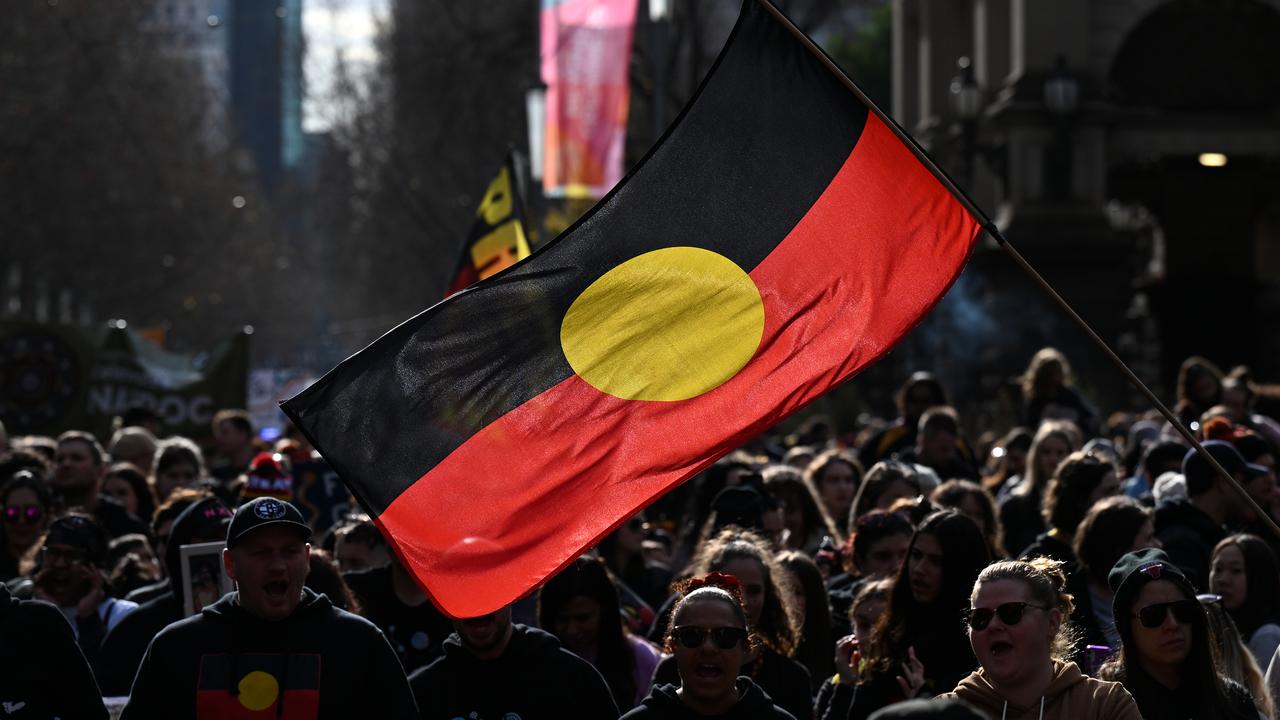
Australia continues to face the “hard business” of reconciliation despite the successes of Indigenous Australians, says the man who delivered a momentous parliamentary apology to the Stolen Generations.
A commemorative breakfast on Friday, marking 18 years since former prime minister Kevin Rudd delivered the apology in federal parliament, was attended by political leaders, Indigenous trailblazers and members of the Stolen Generations.
Dr Rudd paid tribute to Indigenous ingenuity over the years since in a pre-recorded speech delivered from Washington DC.
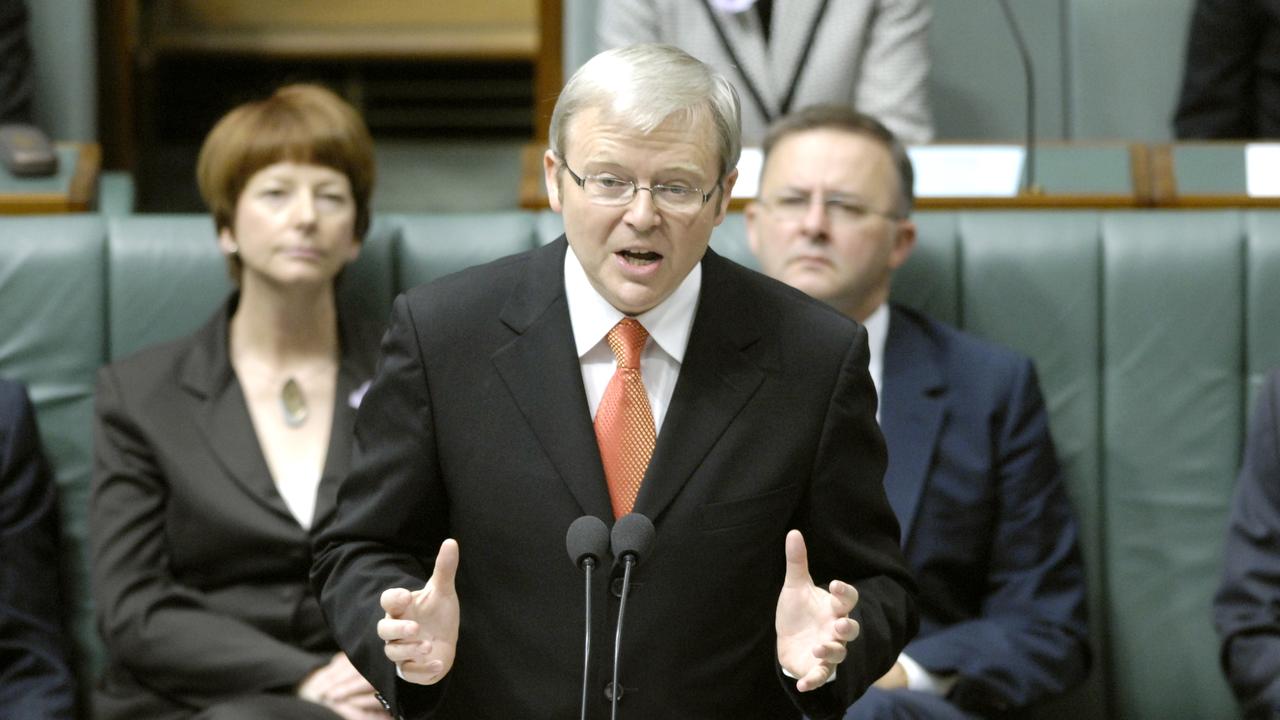
“There have been failures and successes along the way,” Dr Rudd said.
“We are tempted often just to focus on our failures. In some respects, that’s our normal human nature at work.
“But it’s not good for the country, nor for Aboriginal people just to do that.”
Despite this, the former prime minister conceded the “hard business” of reconciliation goes on.
“Regrettably, not all support it,” he said.
On January 26, a man allegedly threw a homemade bomb, which failed to detonate, at an Invasion Day crowd in Perth.
The incident has been declared a terrorist act and police allege the accused, whose name has been suppressed by the courts, was motivated by “pro-white male” racist ideology.
“It was an outrageous assault,” Dr Rudd said.
“Not only on (Indigenous men, women and children), but their non-Indigenous supporters and the right of all citizens to protest peacefully.”
It followed the Bondi Beach terror attack on December 14, when 15 people were killed after two gunmen opened fire on Jewish people celebrating Hannukah.
Mr Rudd said Indigenous and Jewish Australians shared the bond of experiencing the indignity of racism on our shores.
“We must never heed the call of those who seek to dehumanise and divide,” he said.
“Racism is not simply harmful, it is also unpatriotic.”
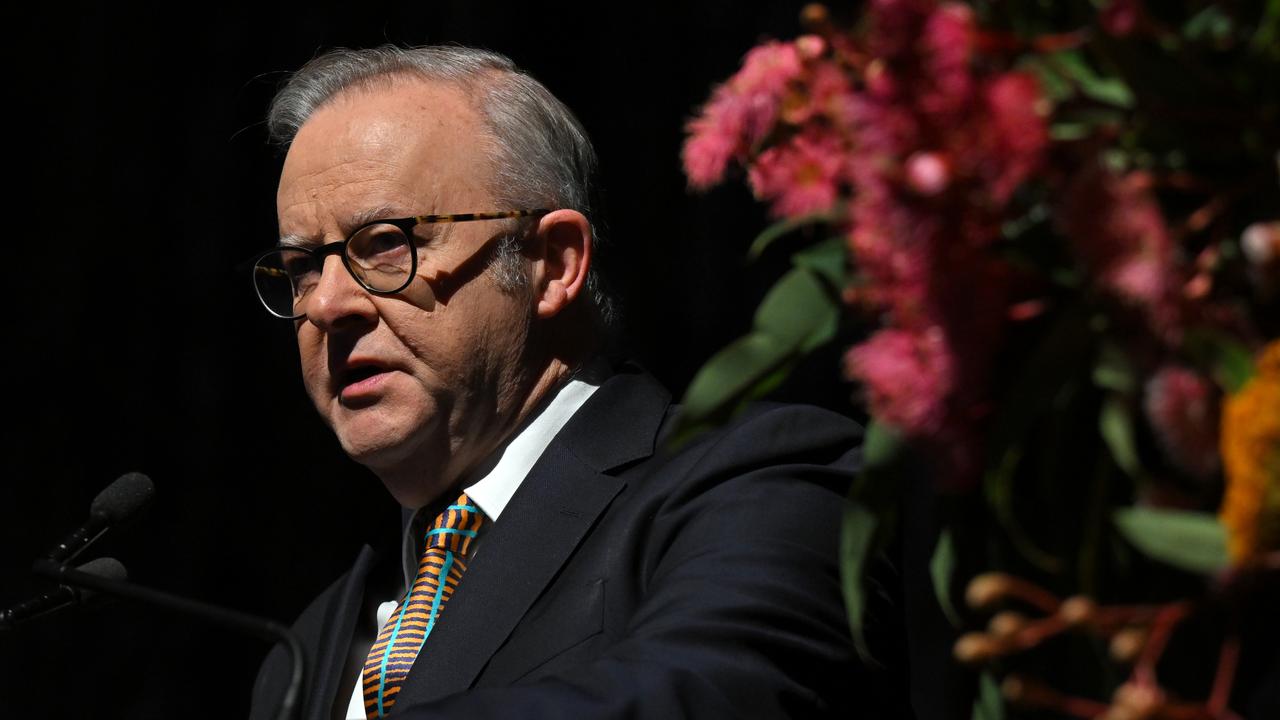
Prime Minister Anthony Albanese said the apology was an important step forward, but not the end of action.
“Saying sorry was never intended as the final word, but as the beginning of a bigger, brighter story, a story in which we keep working to close the gap between Indigenous and non-Indigenous Australians until that gap belongs to history,” he said.
Mr Albanese on Thursday delivered his annual statement on Closing the Gap outcomes, which found just four of the 19 targets were on track to be met by 2031.
ACT Supreme Court Justice Louise Taylor, the first Aboriginal woman appointed to a superior court in Australia, said survivors deserved a special place in the national story.
“For the apology to have ongoing meaning – as it should – our reverence for survivors must be reflected in modern day government policy,” she said.
This included properly taking up the challenge of the recommendations made in the 1997 Bringing Them Home report.
Survivors of the Stolen Generation will be able to access $87 million of support services over the next four years, which will include family tracing and reunification efforts.
The funds will also go towards access to redress schemes and health services.
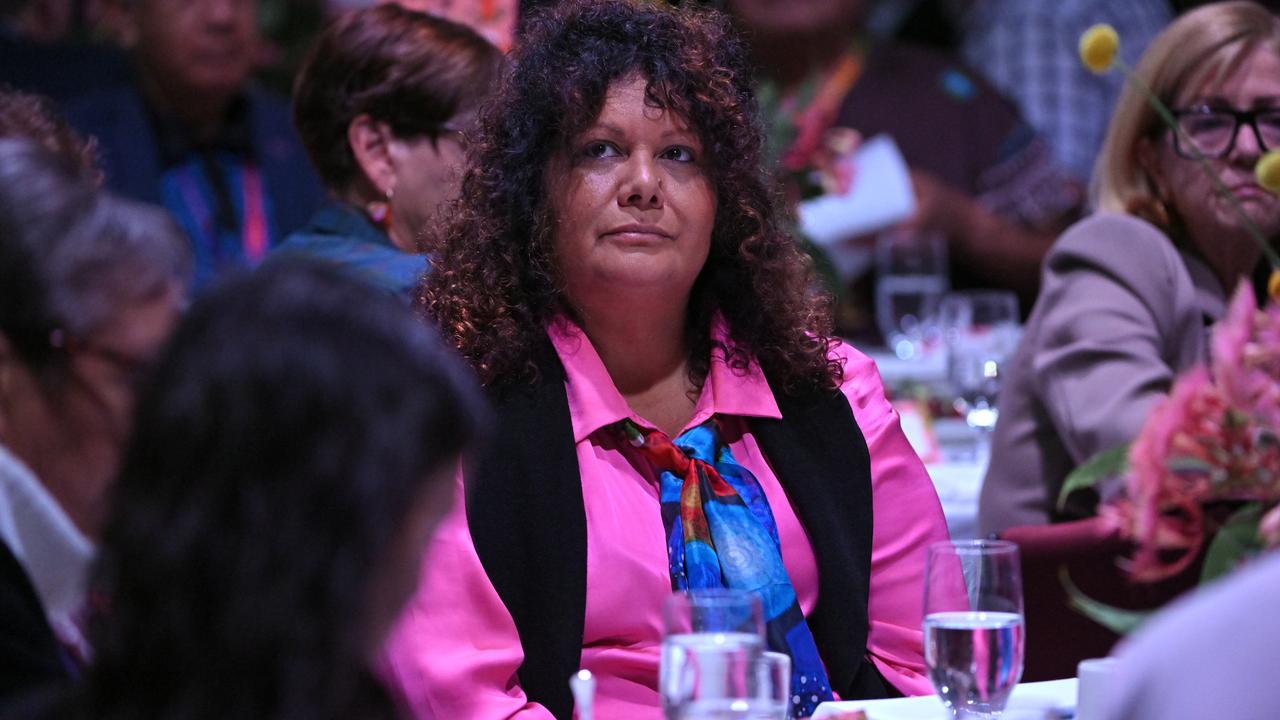
Indigenous Australians Minister Malarndirri McCarthy said survivors, who suffered immeasurable harm, needed continual and meaningful support.
“Sadly, for many of our people, the distress and hurt continues today,” she said.
13YARN 13 92 76
Lifeline 13 11 14