
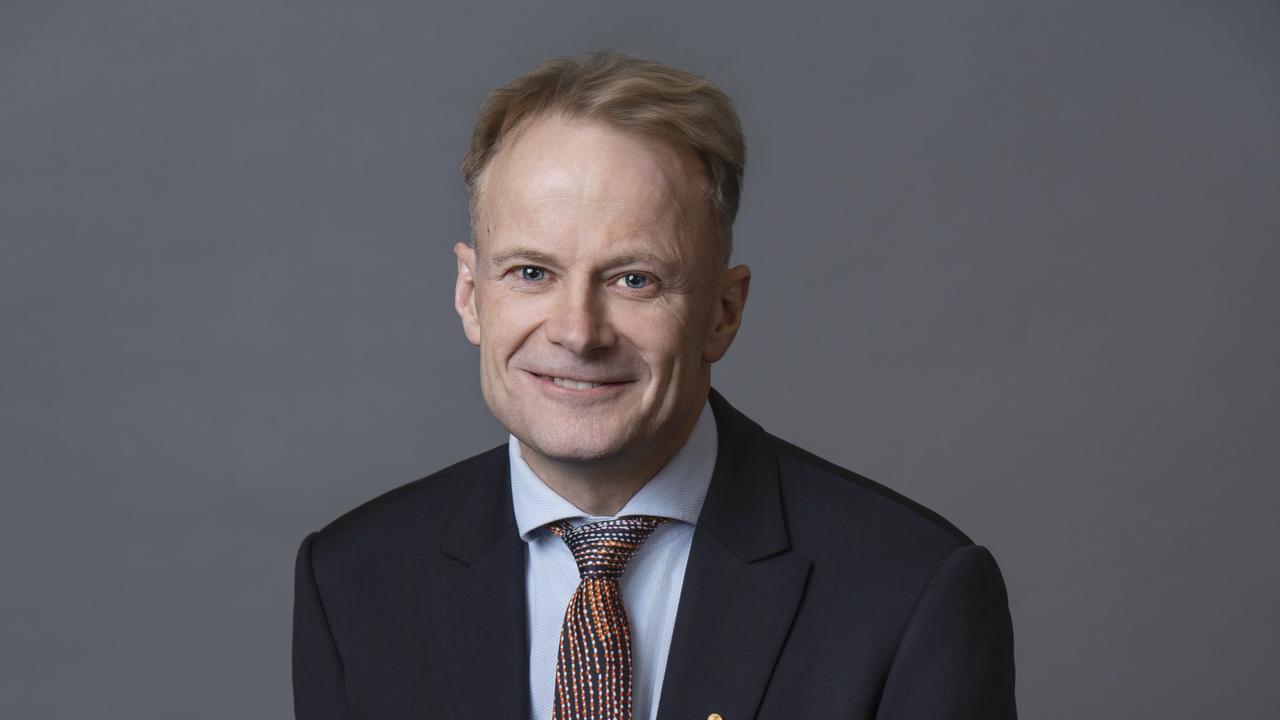
Scientist Richard Scolyer has died following a lengthy public battle with brain cancer, saying in a statement that he would like to be remembered as “a proud everyday Aussie who ‘gave it a crack’,”.
The renowned melanoma pathologist and father of three, who died aged 59 on Sunday, helped save thousands of people’s lives during his career through groundbreaking skin cancer research.
Along with Professor Georgina Long, he took the disease from being a death sentence to largely curable through treatment that activates a patient’s own immune system, bringing hope and healing to many.
Born in Tasmania, Professor Scolyer was diagnosed with an incurable and aggressive stage four brain cancer named glioblastoma in June 2023, aged 56, and given just six to eight months to live.
The internationally respected clinician undertook a world-first experimental treatment based on his and Prof Long’s melanoma research, despite the risk it could cut life even shorter.
Immunotherapy before surgery to remove the tumour and a personalised vaccine helped stave off the disease for almost two years.
Prof Scolyer was a keen triathlete and former head prefect and a dux at high school before studying medicine at the University of Tasmania.
After four years of clinical medicine, he went on to specialise in pathology, completing his training at the University of Sydney, where he became a professor.
He was also a senior staff specialist at Royal Prince Alfred Hospital in Sydney.
Prof Scolyer shared insights on his cancer journey, amassing thousands of followers on social media and earning praise for his bravery in advancing scientific understanding.
But in March 2025, he revealed a recurrent tumour had returned and was quickly growing like tree roots in the left side of his brain after a complex surgery was unable to remove the entire mass.
He told followers the immunotherapy treatments and a vaccine might have made a difference and the potential benefits of the experimental procedures were worth the risk.
“More work needs to be done in a clinical trial to prove this,” he said.
“At worst, I’ll leave the legacy of increased scientific knowledge to benefit future brain cancer patients.”
“My final message to all Australians is to say thankyou for your outpouring of love and support for me and my family,” Prof Scolyer said in a statement released after his death.
“Those of you I met during my travels as joint 2024 Australian of the Year, my amazing online community which spans many countries, and of course my hometown Tasmanians – you’ve laughed with me, cried with me, and provided encouragement and support to keep going just when I needed it most,” he said.
“I haven’t sugar coated my journey and I sincerely thank you for allowing me the space and opportunity to share it with you, warts and all. I hope I have in some small way made the road ahead easier and smoother for others.
“If my legacy was to continue beyond these words, I would be delighted and humbled to be remembered as a proud everyday Aussie who “gave it a crack”, and in doing so, inspired others to pursue their dreams and passions with humility, love and compassion.”
Professor John Thompson of Sydney University praised Prof Scolyer’s “cheery, down-to-earth, ‘lad from Launceston’ personality”.
“His stellar career in medicine and pathology research has produced huge benefits for countless cancer patients worldwide,” he said.