

So adamant is the Albanese Government to keep AUKUS nuclear waste plans secret, they initiated a Federal Court appeal to overturn an Administrative Review Tribunal transparency win. Rex Patrick reports.
Are we seeing another nail in the coffin of Freedom of Information and what is left of government transparency?
When ART Deputy President Britten-Jones handed down his decision in favour of disclosure he was adamant “there is a significant public interest in understanding policy decisions by Government in respect of nuclear waste management”.
He was quite convinced that the “best way to achieve [nuclear waste] social licence and trust is through transparency and not secrecy”.
But his very strong position was not enough to overcome Prime Minister Albanese’s secrecy obsession. In a very rare move, the Federal Government has appealed the Tribunal’s transparency decision to the Federal Court.
Political Sensitivity
It’s clear that the documents the Government was ordered to make public are politically sensitive. They may well be politically radioactive, but this is not an allowable reason under the Freedom of Information Act to refuse to release documents.
Britten-Jones stated in his decision:
I do not consider that there would be significant harm from disclosing geological information about a particular site even if it could be inferred that the site is either ruled in or ruled out from further consideration as a location for storage or disposal of nuclear waste.
At least one potential site for AUKUS waste is named in the documents.
In response to the Government’s pleadings for narrative control, Britton-Jones stated:
I can understand the [Government’s] preference for an orderly release of information but if the material was released, the Government would be able to provide its own context and the public would benefit from better understanding the process being undertaken.
He went on to declare:
Whilst there may be some inconvenient responses to the release of the information requiring Government action, the release would lead to and inform debate on a matter of public importance and it would increase scrutiny, discussion, comment and review of the Government’s activities. These are factors in the public interest that favour giving access to the material in issue to the Applicant. In my view, these factors outweigh any of the concerns expressed by the witnesses for the Respondent.
The documents requested also include documents that Britten-Jones stated “might well be contentious and give rise to sensitivities’.
That’s all too much for government.
Instead of handing the documents over the Government has challenged the Tribunal’s decision in the Federal Court.
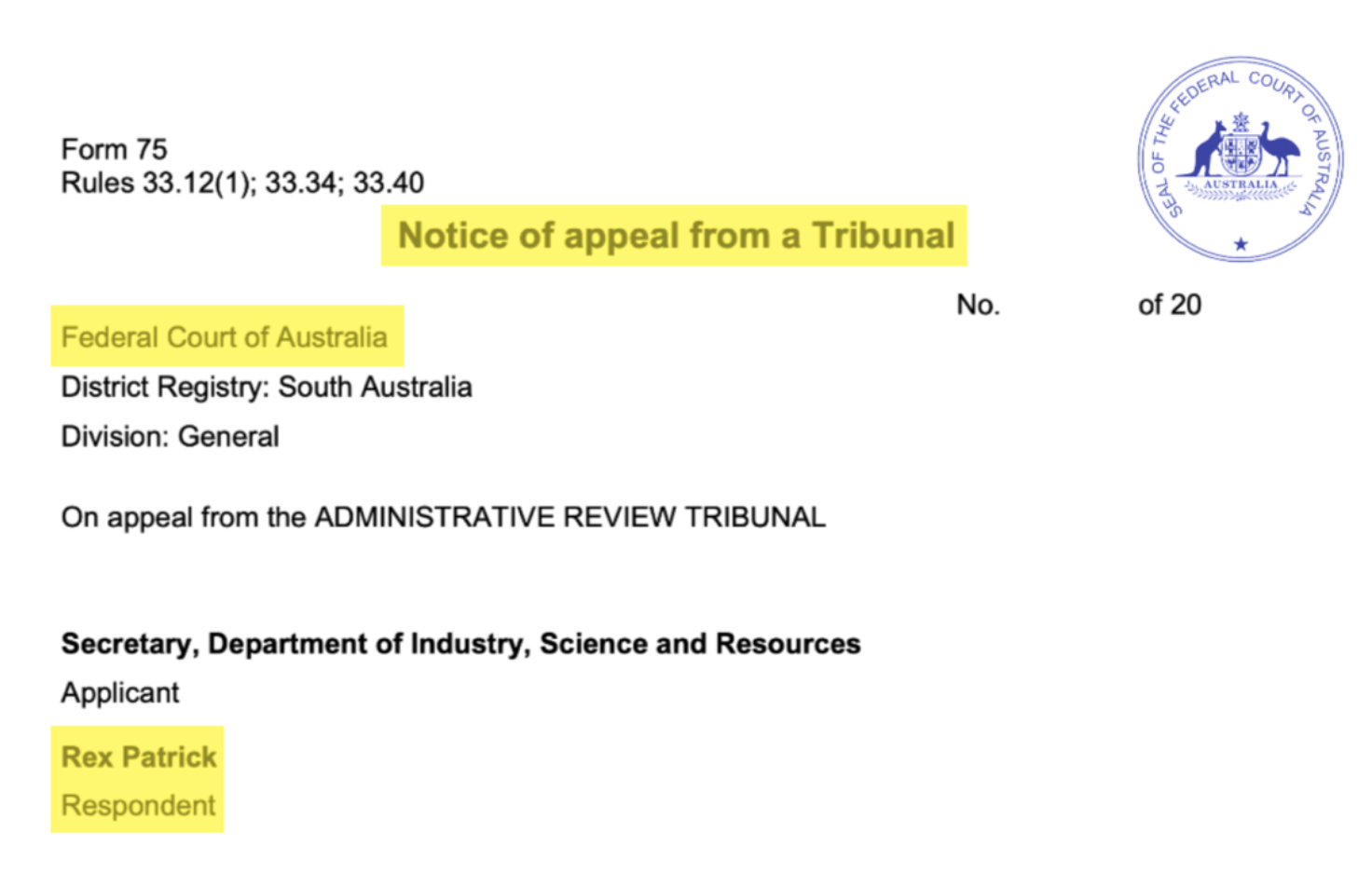
Notice of Appeal (Source: Government)
The end of FOI?
The notice of appeal includes a request to the court that if the Government are successful,
then I will have to pay their legal costs.
I won the transparency battle in the Tribunal, and the Government now wants me to personally pay up to $150,000 if they win their appeal. With their very deep pockets (your money) they will likely engage a King’s Counsel to take on a bush lawyer.
In lodging the appeal and seeking costs against me the Government has ignored its own model litigant rules, which state that it can’t “take advantage of a claimant who lacks the resources to litigate a legitimate claim”. The rules also state that “In certain circumstances, it will be appropriate for the Commonwealth or Commonwealth entity to pay costs (for example, for a test case in the public interest).”
Greens spokesperson for Justice, Senator David Shoebridge, was unimpressed on hearing of the proposed cost order:
“The Labor government has repeatedly made it clear that they are willing to use millions of public dollars to silence whistleblowers and hide the truth from the public.
But even from them, this is fresh territory.”
“Threatening someone with a potentially crippling legal bill simply because they put a successful FOI through the system is bullying, plain and simple.”
In September last year the Albanese Labor Government tabled an FOI Amendment Bill in the Parliament with provisions that sought to dramatically expand Government secrecy. After a significant campaign by civil society groups, the Bill was booted from the Parliament by all non-government senators.
Albanese’s secrecy grab failed.
The appeal in this matter revives Albanese’s secrecy plans. It matters little what the law is, if a citizen fights and gets a good transparency decision from the Information Commissioner or the Administrative Review Tribunal the Government can just appeal it to the Federal Court and threaten legal costs. The regular citizen will have to walk away. They can’t risk a loss.
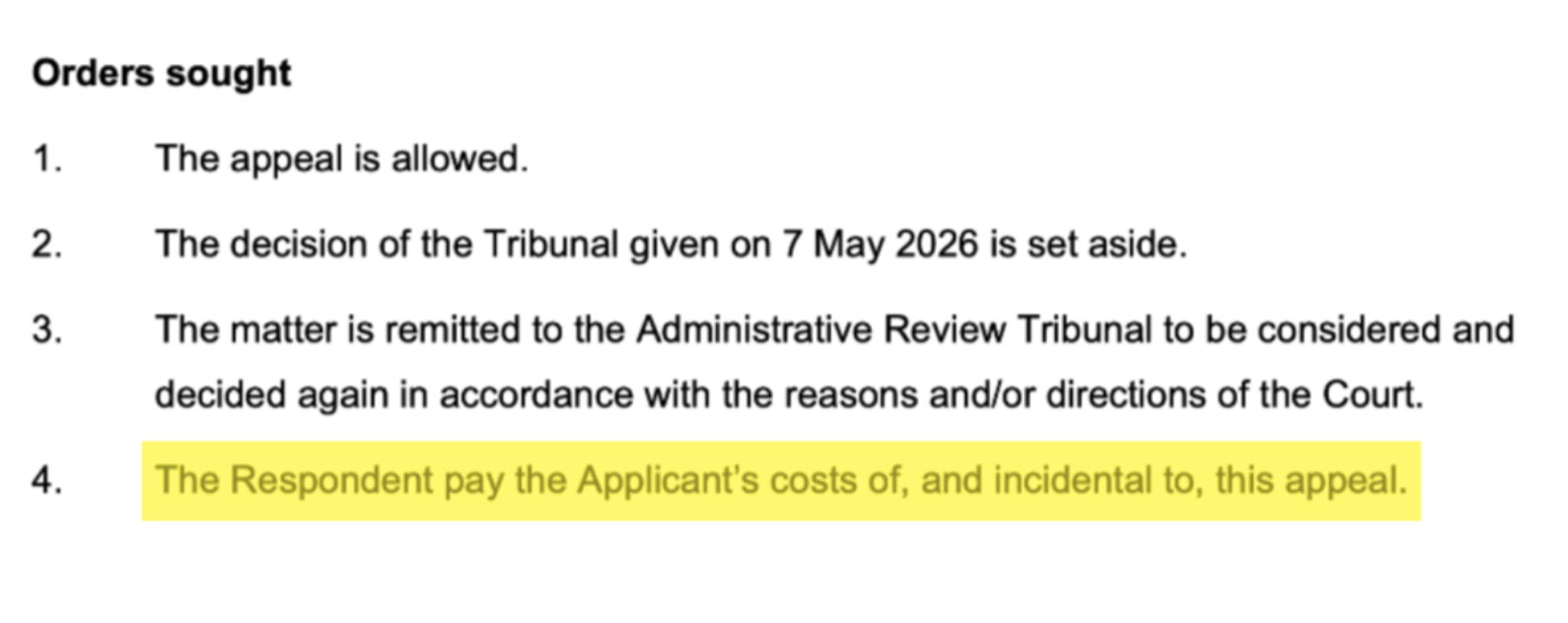
$150,000 Cost Risk (Source: Government)
Bingo for the Government! Who needs greater secrecy laws when you’ve got deep pockets funded by the very taxpayers’ they deny information to.
Senator Shoebridge stated further,
“This is another ugly precedent in secrecy from the Albanese government, and this time it’s delivered with a side serve of intimidation. It’s really shameful stuff.”
The approach taken is a nuclear strike on transparency of government and could well mean an end to FOI fights. It’s the absolute antithesis of the new era of transparency Albanese promised before his was elected. Indeed, it’s a very different story now that he’s got his hands on the government’s legal armoury.