
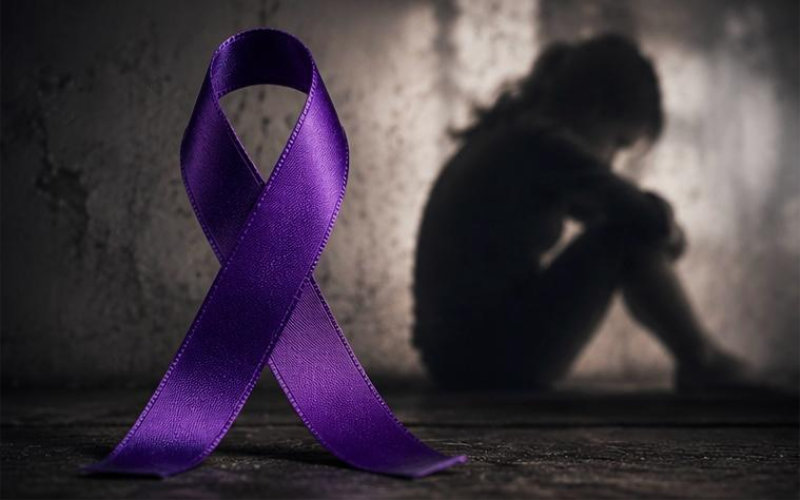
So far this year, 34 women have been killed by their domestic partners while our Government turns a blind eye, carefully selecting what atrocities to focus on. Andrew Brown with the first in a series on the scourge of domestic violence.
Somewhere in Australia today, a writer named Sherele Moody is updating a ledger. She is not a government official. She receives no state funding. She does it because the Australian government has decided that counting the women killed by men in this country, as they die, is not its responsibility.
Her project, Australian Femicide Watch, exists because the state will not keep the record.
As of last week, it shows 34 women dead in 2026.
The year is not yet half done.
Death toll kept quiet
A death toll you do not maintain is a death toll you cannot be held to. That is not an administrative oversight. It is a policy. And that policy is the subject of this series.
Australia does not lack knowledge about violence against women. It has decades of research, coroners’ findings, royal commissions at state level, ten-year national plans and ministerial task forces. In April 2024, the prime minister declared a national emergency, convened National Cabinet and stood before cameras and said women dying was a crisis demanding action.
The year ended with 101 women dead. Up from 74 the year before. Up from 56 the year before that.
This series is not about the failure to address that problem. It is about something colder. Australia has not failed. It has succeeded. It has built, over two decades and across governments of both colours, a political system for managing this crisis that converts grief into procedure, absorbs public pressure without releasing it, and ensures that no individual, no institution and no minister is ever required to answer for a specific death in a specific way that carries specific consequences.
The machine works. Women keep dying inside it.
To understand how that machine works, consider two moments involving the same Prime Minister.
On the night of December 14 last year, two ISIS-linked gunmen opened fire on families gathered at Bondi Beach for a Chanukah celebration. Fifteen people were killed. It was Australia’s worst terrorist attack since Port Arthur. Anthony Albanese stood before cameras within hours.
“We will eradicate it,” he said.
The 2026 federal budget allocated $604.2m in response. That includes $131.1m for a Royal Commission on Antisemitism and Social Cohesion, whose interim report the government accepted in full, and $124m specifically for Jewish community security.
Five months later, a Hobart radio presenter named Christie Hayes asked Albanese about the killing of women. Four allegedly killed in domestic violence incidents in four days. A petition for a royal commission signed by more than 90,000 Australians. What did the government intend to do?
“What does a royal commission do besides fund lawyers?” he said.
This is not a contradiction. It is a policy. It is the precise and measurable expression of whose deaths trigger a national reckoning in Australia and whose deaths trigger a press release.
The numbers make it visible. Fifteen people were killed at Bondi. In 2024 alone, 101 women were killed by men who knew them. Two women die this way every week. That is fifteen dead every seven and a half weeks. A Bondi-equivalent, on a rolling schedule, year after year, decade after decade, without a royal commission, without an emergency budget, without a prime minister saying he will eradicate it.
The difference is not the scale of the dying. The difference is the lobby.
The lobby impact
Australia’s Jewish community numbers approximately 117,000 people. It is represented by the Executive Council of Australian Jewry, the Australia-Israel and Jewish Affairs Council, the Zionist Federation of Australia and associated organisations with documented access to both major parties at the highest levels. When 15 Jewish Australians were killed at Bondi, that community had the political infrastructure to ensure the response matched the horror.
Women being killed by their partners do not have that infrastructure. They have Sherele Moody updating a ledger the government refuses to keep. They have Daisy Gardener at Fair Agenda, pointing out that the same budget that found $604.2 million for antisemitism response found nothing to increase resourcing for domestic violence services.
They have women in New South Wales waiting up to three months for crisis refuge accommodation. They have a crisis line whose demand has risen 3,000% since it was built and which received no new funding last week. They have Red Heart Movement founder Moody, who asked to meet with Albanese before his interview. He has not sat down with her. She told MWM:
I just think the Prime Minister really has no idea about how angry and sad and exhausted women are.
This is the first in a series; part two aims to dismantle the public myth of what domestic violence looks like. Most Australians are still waiting for a bruise before they believe it. Coercive control and financial domination happen long before a fist is raised. Hannah Clarke never saw a punch coming. Neither did the system that was supposed to protect her.
Part three will put that system in the dock. The police who log the call and close the file. How the courts treat prior violence as background rather than proof. The agencies that recorded the danger and filed the paperwork. The system is not broken. It is doing exactly what a chronically underfunded, politically abandoned system does. It processes cases. Some of the women do not survive the processing.
Part four will go where the crisis is worst and most consistently erased. Indigenous women are dying at rates that would, in any other population, produce a separate commission. They produce an asterisk in the data instead. Community-led responses that work are underfunded. That is not oversight. It is a pattern.
Finally, we’ll make the case for a Royal Commission with federal subpoena powers and legislative obligations attached to its findings. Victoria’s 2016 commission drove real reform. South Australia produced 136 recommendations, and the government accepted seven. The difference between those outcomes is what happens to institutions that ignore the findings. Not another review. A reckoning.
One hundred and one women in 2024. Fifteen dead at Bondi. The government knows exactly what it looks like to treat a mass killing as a national emergency. It has demonstrated that knowledge with named dollar figures, a Royal Commission and a prime minister who used the word eradicate.
Meanwhile, Sherele Moody’s ledger keeps growing.
International Women’s Day. Never closer to equality, nor closer to losing it.