
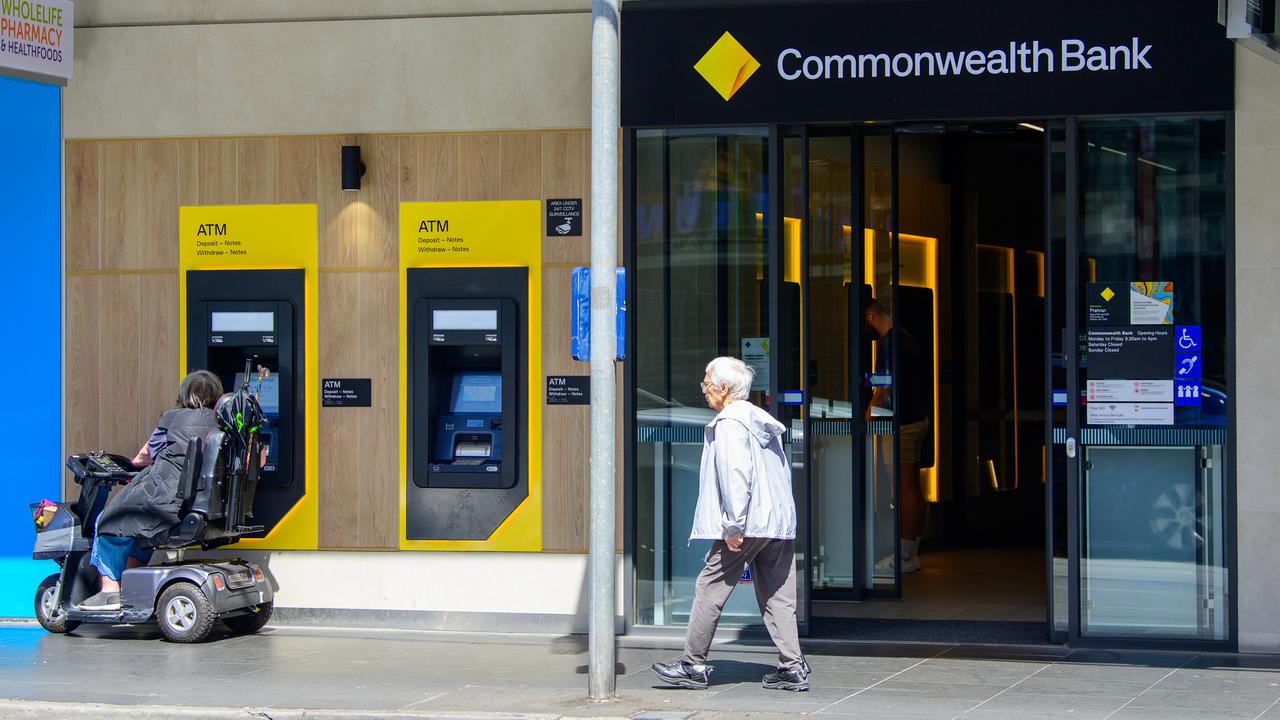
Australia’s largest bank is set to report its financial results, six months after a similar earnings announcement sent its shares tumbling.
Commonwealth Bank will hand down its results for the six months to December 31 on Wednesday morning, an announcement that will be watched closely for what it says about its finances as well as the health of the banking sector and national economy.
Consensus estimates are for CBA’s revenue to grow 5.05 per cent year-on-year to $14.81 billion, while earnings per share are expected to rise 1.11 per cent year-on-year to $3.10.
After CBA posted its results for 2024/25 on August 13, its shares fell 5.4 per cent to $169.12, from $178.80.
They have since remained under that level, changing hands on Tuesday afternoon at $159.17, down 0.45 per cent from Monday and down 10.9 per cent for the past six months.
That underperformance follows a period of stellar returns.
CBA shares hit a record high of $192 in June after changing hands around the $100 level from mid-2021 until late 2024.
IG analyst Tony Sycamore said the August 2025 sell-off came even as the bank posted solid numbers, including growing its full-year profit by 4.0 per cent to $10.25 billion and holding its net interest margin steady at 2.08 per cent.
“When you are priced for perfection, a result that is merely in line with expectations without a shiny earnings upgrade often feels like a letdown,” Mr Sycamore said.
There were also concerns about compression of its profit margin because of fierce competition for deposits, he said.
CBA’s first-quarter trading update on November 11 only added to investors’ worries despite the bank’s profit rising 2.0 per cent to $2.6 billion, Mr Sycamore said.
Its core earnings of $3.9 billion missed consensus by about two per cent, mostly because of unexpected costs, while its net interest margin was reported as slightly lower.
Net interest margin is used to gauge the profitability of banks, measuring the difference between the income generated from loans and the interest expenses paid to depositors.
Even with the roughly 20 per cent drop in CBA’s shares, it was still expensive, Morningstar market strategist Lochlan Halloway noted.
CBA was trading Tuesday at a price-to-earnings ratio of 26.7, making it the most expensive bank in the developed world according to market capitalisation.
Its Australian peers trade at a PE ratio in the teens, as does US banking giants such as Morgan Stanley and Bank of America.
Mr Sycamore said the market would look for reassurance that the sector remained healthy, with solid credit volumes, low bad debts and a robust capital position.
“As the only big-four bank reporting in this cycle, CBA is the bellwether,” he said.
In analysing CBA’s earnings, Mr Halloway said Morningstar would focus on margin trade-offs used to support loan growth, progress in growing loans outside broker channels, and its deposit mix, particularly the low-cost transaction accounts that provided a funding advantage.