
With corporate media forcing PM Albanese into a small target corner on messaging, the right is filling the rhetorical void. Andrew Gardiner looks at the repercussions.
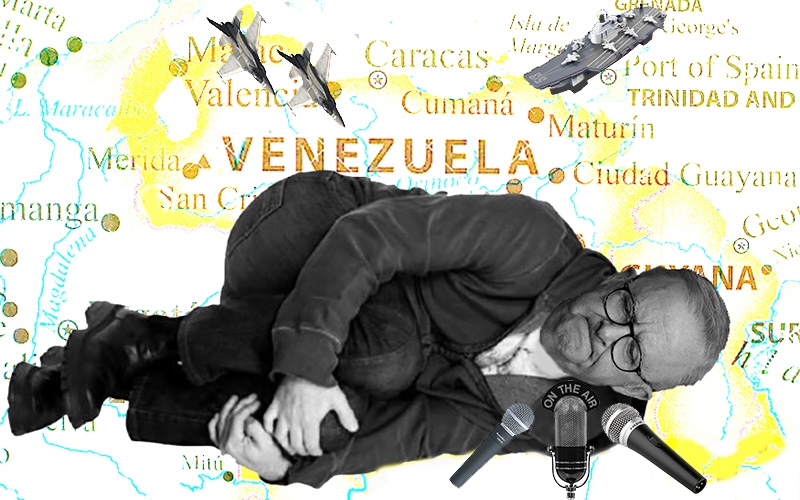
Canberra’s spin cycle took a familiar turn following both Donald Trump’s abduction of Venezuela’s president, Nicolás Maduro, at the weekend, and the Bondi Beach attacks before that. It’s a dynamic we’re seeing more and more of, the right straight out of the blocks, with a clear (if contentious) stand on both, which left our super-cautious PM in the rhetorical dust.
In a media release posted Sunday morning, Opposition Leader Sussan Ley threw her unqualified support behind Trump’s widely-condemned move against Maduro: “We should live in a world where dictators and despots face justice for their crimes”. On Bondi Beach, Pauline Hanson was well-and-truly in her element: “Since 1996, I have been warning Australia about the dangers of letting people into this country who refuse to integrate and assimilate.”
In contrast, Albanese’s handling of Venezuela felt over-parsed and run past a DFAT committee to make sure Trump wouldn’t be triggered into slapping on a new tariff (or worse). “We continue to support international law and a peaceful, democratic transition in Venezuela that reflects the will of the Venezuelan people (and) urge all parties to support dialogue and diplomacy in order to secure regional stability and prevent escalation.”
As with his Bondi Beach response, it was a typically safe, small target approach, simultaneously citing “international law” while anxious not to offend the man who’d just broken it. A jaded Amy Remeikis summed it up well.
The US has lost any pretence of legitimacy – Xi can do what he wants with Taiwan, Putin can play out his plans – and the US has nothing. And the Coalition is like ‘this is great’ and Labor is silent/‘gravely concerned’. Fab times. https://t.co/yLd0LsWjhN
— Amy Remeikis (@AmyRemeikis) January 3, 2026
But there’s a political upside to Ley opening “this is great”. Say what you will about her endorsement of piracy and kidnapping in Venezuela, or Hanson’s shameless pandering to racist impulses over Bondi Beach. The fact remains, both conveyed a clear message and were willing to take a stand.
This scores points with many voters, at Albanese’s expense.
Bondi polling
Buoyed by a corporate media narrative that pretty well echoed their own, Ley’s and Hanson’s attacks worked. An SMH survey published just before Christmas found 46 per cent of people thought the government’s response to Bondi Beach was weak, poll respondents cutting his lead over Ley as preferred PM by almost half, while lifting Hanson’s party to unheard-of heights with 16 per cent support.
At this early stage of her tenure as Opposition Leader, Ley hasn’t collected enough baggage in punters’ eyes to be pegged as “just another flip-flopping politician”. More than two years out from an election, disengaged voters are yet to put her under the microscope, allowing Ley to present herself – for now, at least – as a strong and stable aspiring leader.
“Political parties ignore the power of clear, emotionally charged messaging at their peril”, Brisbane-based comms professional Roxane Horton said. It seems Albanese isn’t listening.
It’s a pattern dating back at least as far as Kevin Rudd ’s time in The Lodge. Corporate media keen to pounce on any slip-up on Labor’s part; the ALP rolling itself into a small target via a lower profile and workshopped comms; the right seeking to fill the resulting, perceived void in leadership by tossing soundbites at that same, often-friendly Fourth Estate.
Mainstream media blind-spotting
During Albanese’s first term, Peter Dutton used this trick to generate a profile that often dwarfed Albanese’s (frequently on issues outside his purview).
But the real impact of this lopsided media landscape is on the policy platforms of both sides, forcing both Albanese and Ley to the right. It may surprise some readers to learn that at one stage, these strange bedfellows both convened for the Parliamentary Friends of Palestine.
In 2011, Ley voiced her support for Palestinian statehood “because it will give heart to the ordinary people of the West Bank and Gaza”. Earlier still, Albanese blamed Jewish settlers in places like the West Bank for “the breakdown and impasse in the Middle East peace process … a tragedy for both Israelis and Palestinians”.
Neither would come within a mile of such statements these days.
In November, pressure from corporate media, the fossil fuel lobby and her National Party colleagues forced Ley – purportedly a ‘moderate’ – to go along with ditching the Coalition’s commitment to net zero by 2050. Then there’s her propensity for wading into the far-right quagmire of crime and culture wars, most infamously revealed in a 2024 post scaremongering on “foreign criminals” assaulting women.
Albo in the middle
Albanese’s reversion from the Socialist Left to the political middle is a bigger body of work. Since his 2022 election, the PM has presided over a catalogue of anaemic and sometimes egregious policy calls, a few of them listed here:
- A “toothless” national corruption body (NACC) hamstrung by narrow parameters and a high bar for public hearings;
- Political Donation Laws designed to entrench major parties/stymie new independent voices like the ‘Teals’;
- Failure to reform lobbying laws and close loopholes;
- Cronyism and “jobs for mates” largely unaddressed;
- Planned Freedom-of-Information ‘reforms’, which would in fact weaken transparency;
- New fossil fuel approvals like North West Shelf rendering net zero targets a joke;
But perhaps the most heinous call was to nix the judicial media inquiry, recommended by a parliamentary committee, that might have freed Albanese, the ‘socialist’, from the shackles of pragmatism, and liberated Ley, the ‘moderate’, from a far-right line that isn’t really her.
Helping level the playing field on information – coin of the political realm – was a bridge too far for Albanese. He is, after all, a 30-year MP who wants to stay there.
Emboldened by the current media landscape, Sussan Ley sometimes goes too far.
The impacts of media agenda setting on actual policy predate Kevin Rudd, of course, arguably dating back to the invention of the printing press (1439). Albanese’s small target approach to the media is mirrored by policies UQ economics professor John Quiggin ($) calls
just far enough to the left of the coalition to provide a point of difference.
For their part, Ley and Hanson know their favourable treatment by corporate media, which they rely on to win the messaging battle, has far-right, Faustian strings attached: lockstep compliance on lower taxes, fewer regulations and no net zero, to name a few. While Hanson is fine with such trifling details, Ley is compelled to toe that line in the hopes of fending off bona fide right-wing challengers like Andrew Hastie.
“Independent media are vital for strong democracies”, the Organisation for Security and Co-operation in Europe’s representative on media freedom, Jan Braathu, said last March. Media diversity helps put the battle of ideas on a playing field that doesn’t tilt too egregiously towards the rich and powerful.
For its part, Australian democracy staggers on under the burden of media ownership concentration (almost exclusively in right wing hands) ranked second-worst in the world.
The narrative battle here is between the right and something that calls itself Labor – if it can be nailed down on substance. Albanese can’t or won’t get a clear message out there, no doubt mindful of its evisceration by corporate media on those rare occasions it actually says something (remember the Stage Three tax cuts?)
Anyone doubting corporate media’s ongoing sway need only look at how things shifted after Bondi Beach. Specifically, take a look at the vociferous, weeks-long campaign for a federal Royal Commission into the attack, despite one already having been called at a state level.
And how is Albanese handling the pressure for a probe he’d already deemed unnecessary? By potentially backing down and establishing a Royal Commission, the very lack of leadership he stands accused of.
It seems life imitates narrative.