

Australia’s exchange-traded fund industry soared to new records in 2025 – and more growth is expected in 2026 for the innovative investment instrument.
Assets under management for Australian ETFs surpassed $300 billion in September and reached $324.9 billion at the end of November, having started the year at $247 billion.
“To put this in context, it took the domestic ETF market 21 years to reach the first $100 billion in assets, three more years to $200 billion, and just 15 months thereafter to $300 billion,” said Arian Neiron, the chief executive and managing director of VanEck’s Asia Pacific business.
“Based on a conservative assumption of roughly 20 per cent compound annual growth over the next five years, we see the industry scaling to more than $750 billion by 2030,” he told AAP.
An estimated 411,000 Australians began investing in ETFs in 2025, taking their uptake to 2.7 million, according to a survey of 1,505 financial advisors and 1,770 ETF investors that Betashares released in December.
The Australian ETF issuer expects three million Australians will be invested in ETFs by the end of 2026, with assets under management exceeding $500 billion by the end of 2028.
For those who aren’t familiar, ETFs are investment vehicles that offer ownership in other underlying assets, such as a basket of shares, commodities, precious metals, debt, property or cryptocurrency.
They trade just like shares on stock exchanges such the Australian Securities Exchange, making them easy to quickly buy and sell, and simple for investors to determine instantly what their assets are worth without having to wait for a monthly or quarterly statement.
“The on-exchange nature of the ETF seems to be very clearly the preferred way for many direct investors, SMSF investors, financial advisors, brokers, to execute their portfolio ideas,” said Tim Bradbury, head of intermediary in Australia for State Street Investment Management, the third-largest ETF issuer globally.
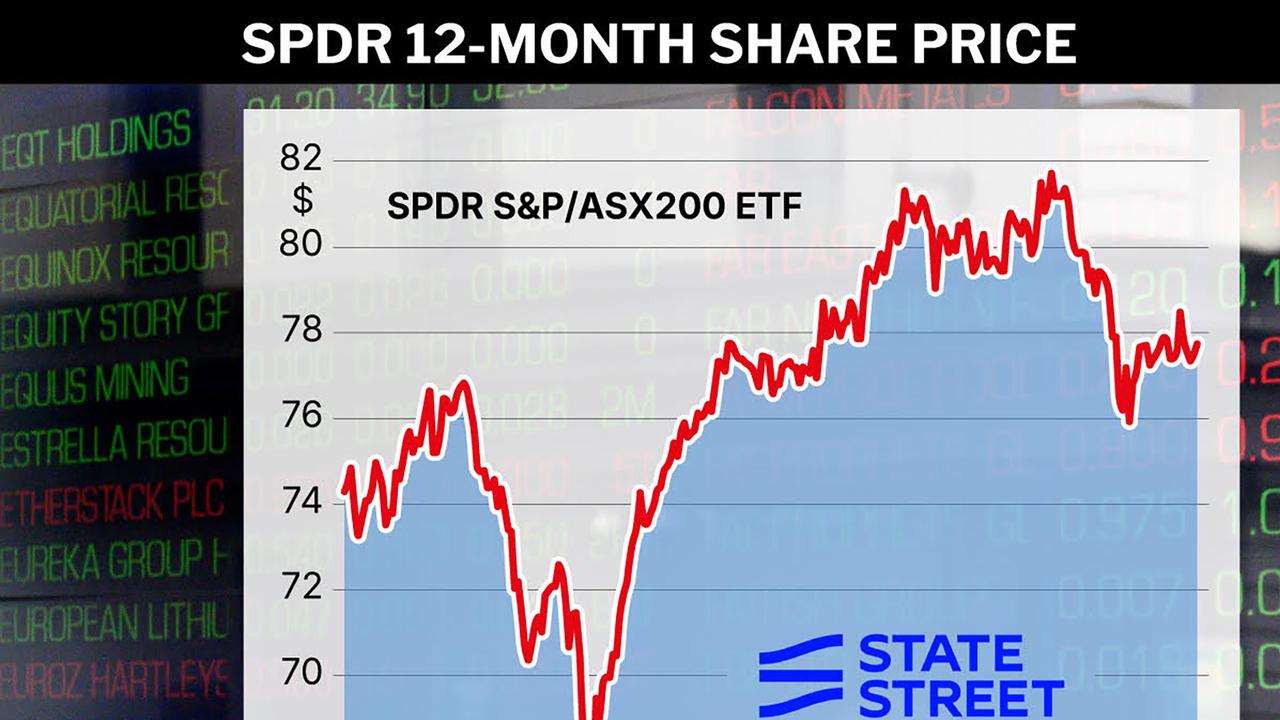
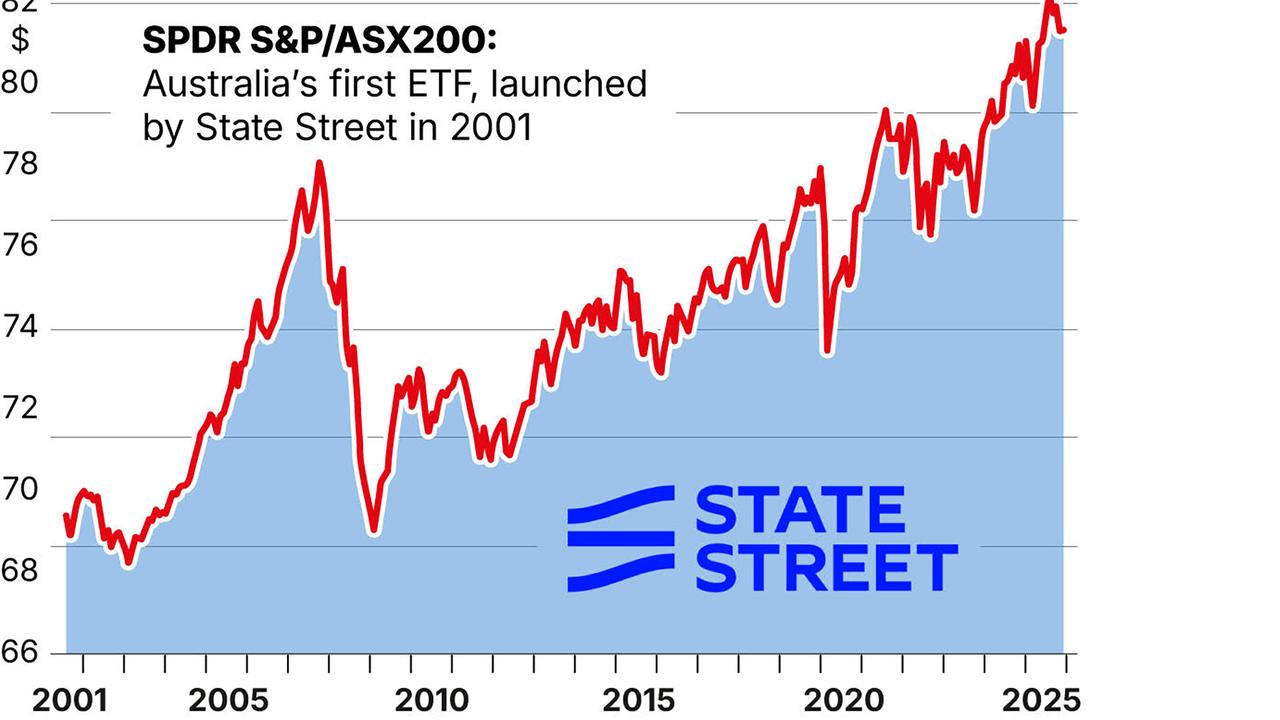
State Street was the first Australian ETF issuer, launching its flagship SPDR S&P/ASX200 ETF in August 2001, which was earlier in December trading just above $77 apiece.
“That’s an ETF that gives you exposure to 200 underlying securities for five basis points, which when you think about that, for every $10,000 an investor puts in, it’s costing $5 for the management fee,” Mr Bradbury explained.
“Managing costs as an investor is really important.”
As of November, there were 459 ETFs in Australia, with 69 launched in 2025, compared to 64 in 2024.
Mr Neiron said “smart beta” ETFs attracted significant interest in 2025, with assets under management surpassing $50 billion, a figure VanEck expects will double to $100 billion by 2029.
Rather than passively follow an investment thematic, “smart beta” ETFs follow a rules-based approach to select investments, while still offering the low fees that traditional passive ETFs are known for.
For example, an equal-weight smart beta ETF for the S&P/ASX200 benchmark index would invest the same amount in each company, regardless of its size, while a traditional ASX200 index fund would invest more heavily in the largest companies such as CBA and BHP.

Other smart beta ETFs have investment rules around momentum or dividends.
Mr Neiron said the keyword for 2026 was selectivity.
“Capital growth and income opportunities should remain available for ETF investors who apply selective approaches and prioritise asset valuations over management fees,” he told AAP.
“Low cost remains important, but understanding the underlying asset valuation and earnings potential will be critical in a market where volatility is likely to persist.”
Mr Bradbury said another ETF theme that had been particularly strong in Australia was around yield, or the income generated.
“That’s been changing a bit,” he told AAP.
“It was more traditionally ‘how do I get my exposure through government bonds or some corporate bonds?’ But now we’re seeing yield being sought in a number of different ways, local and global.”