

Big consulting firms could be capped and split from their auditing functions under changes to the sector, as the prime minister labels conduct in the industry as completely unacceptable.
KPMG has come under fire following revelations its auditors had misused confidential client documents and mishandled a whistleblower who sounded the alarm.
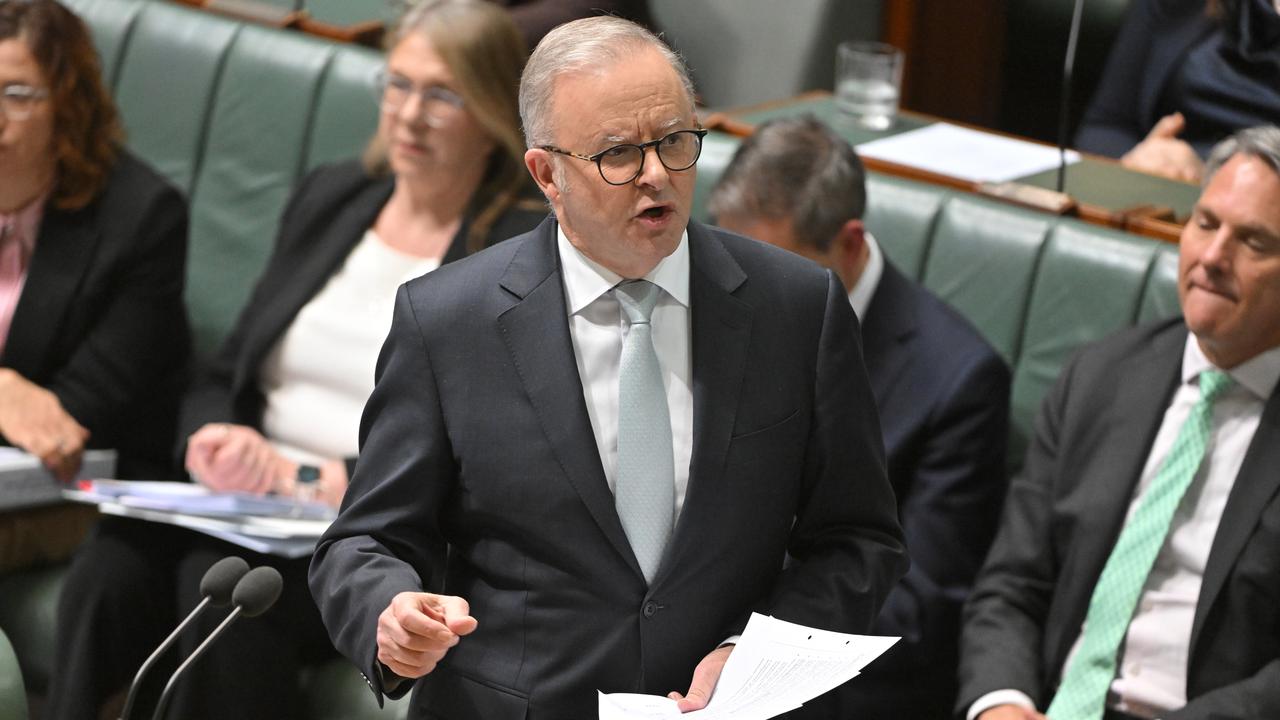
Prime Minister Anthony Albanese said issues in the sector need to be addressed.
“The behaviour of some of these big accounting firms has been completely unacceptable … and they need to be held to account, he told ABC TV on Wednesday.
“They simply have engaged in behaviour that’s not consistent with Australian law or consistent with the way that people would expect big corporations to operate.”
Assistant Treasurer Daniel Mulino confirmed the government is considering separating consulting services from audit functions, as well as reducing the number of partners.
“What we’ve seen … was behaviour by large firms that simply isn’t good enough,” he told ABC Radio.
“It’s in relation to some of the services that underpin our entire financial services system, audit functions, core accounting and consulting functions, where information, confidential information, is being misused across different parts of the firm.”
Allegations KPMG leaked client information emerged during a parliamentary inquiry, where the firm is claimed to have misused information from Lendlease to win external audits of Westpac and Dexus.
Labor released an options paper to improve regulation of Australian accounting, auditing and consulting firms.

These include improving audit surveillance, requiring firms to meet quality management and ethical standards, as well as operational separation of the different arms of the business.
Partnership limits for large accounting firms could also be imposed.
“It is time to return trust and integrity so that the government, taxpayers and other businesses can rely on the services of large accounting, auditing and consulting firms,” Mr Mulino said in a statement.
The federal government was also considering limiting the number of partners in an accounting firm from 1000 to 400.
“These firms have grown very substantially, and that was accommodated by current regulatory settings,” Mr Mulino said.
“That is one of the settings that we will look at, whether that should be brought down to be more in line with other professional services.”
It comes as EY is also facing scrutiny after an employee was one of two people who allegedly accessed the prime minister’s personal banking account while on secondment at the Commonwealth Bank.

The EY employee has since been sacked.
Mr Albanese said it was appropriate the men had been charged for the alleged breach.
“Accessing anyone’s privacy, any Australian’s privacy, is alarming, let alone someone from a contractor who’s not an employee of Commonwealth Bank being able to access that information,” he said.