
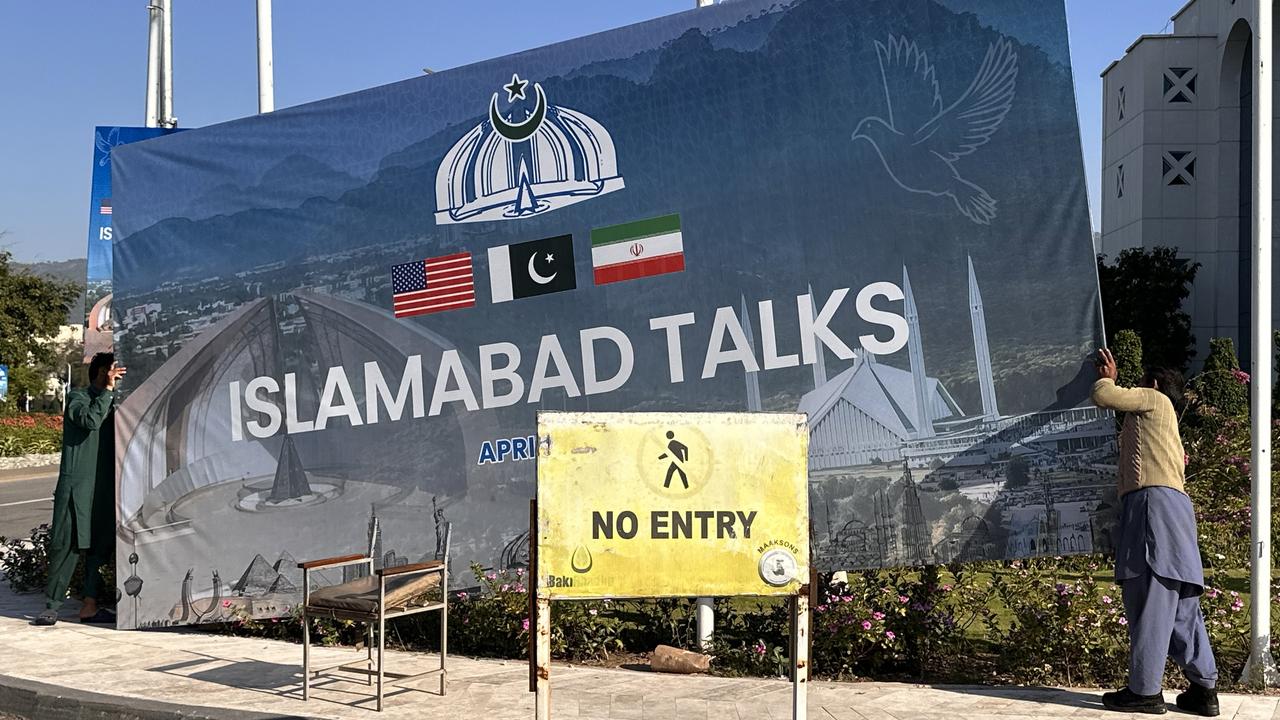
President Donald Trump says the US Navy will immediately start blockading the Strait of Hormuz, raising the stakes after marathon talks with Iran failed to reach a deal to end the war, jeopardising a fragile two-week ceasefire.
Trump also said in a post on Truth Social that the US would interdict every vessel in international waters that had paid a toll to Iran, and begin destroying mines that he said the Iranians had dropped in the strait, a choke point for about 20 per cent of global energy supplies that Iran has blocked.
“Effective immediately, the United States Navy, the Finest in the World, will begin the process of BLOCKADING any and all Ships trying to enter, or leave, the Strait of Hormuz,” he said.
“I have also instructed our Navy to seek and interdict every vessel in International Waters that has paid a toll to Iran. No one who pays an illegal toll will have safe passage on the high seas,” Trump added.
“Any Iranian who fires at us, or at peaceful vessels, will be BLOWN TO HELL!” he added.
Face-to-face talks ended earlier Sunday after 21 hours, leaving a fragile two-week ceasefire in doubt.
Each side had earlier blamed the other for the failure of talks to end six weeks of fighting that has killed thousands, roiled the global economy and sent oil prices soaring.
US officials said the negotiations collapsed over what they described as Iran’s refusal to commit to abandoning a path to a nuclear weapon, while Iranian officials blamed the US for the breakdown of the talks without specifying the sticking points.
Neither side indicated what will happen after the 14-day ceasefire expires on April 22.
Pakistani mediators urged all parties to maintain it.
Both said their positions were clear and put the onus on the other side, underscoring how little the gap had narrowed throughout the talks.
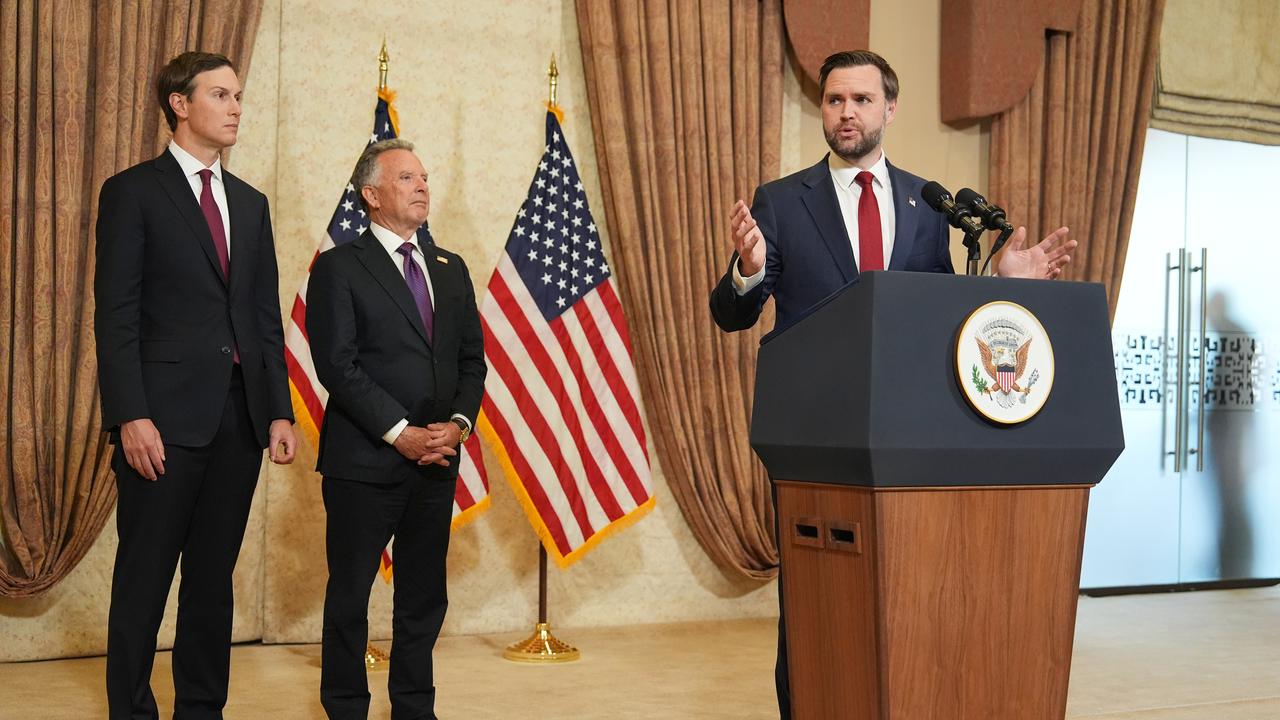
“The bad news is that we have not reached an agreement, and I think that’s bad news for Iran much more than it’s bad news for the United States of America,” Vice President JD Vance, the head of the US delegation at the weekend talks, said earlier.
“We’ve made very clear what our red lines are,” Vance added.
Iran’s Parliamentary Speaker Mohammad Baqer Qalibaf, who led his country’s delegation along with Foreign Minister Abbas Araqchi, blamed the US for not winning Tehran’s trust despite his team offering “forward-looking initiatives”.
“The US has understood Iran’s logic and principles and it’s time for them to decide whether they can earn our trust or not,” Qalibaf said on X.
IIran’s semi-official Tasnim news agency said “excessive” US demands had hindered reaching a deal.
Other Iranian media said there was agreement on a number of issues, but the Strait of Hormuz and Iran’s nuclear program were the main points of difference.
Since the US and Israel launched the war on February 28, it has killed at least 3000 people in Iran, 2020 in Lebanon, 23 in Israel and more than a dozen in Gulf Arab states, and caused lasting damage to infrastructure in half a dozen Middle Eastern countries.
Iran’s grip on the Strait of Hormuz has largely cut off the Persian Gulf and its oil and gas exports from the global economy, sending energy prices soaring.
Pakistani Foreign Minister Ishaq Dar said his country will try to facilitate a new dialogue between Iran and the US in the coming days.
“It is imperative that the parties continue to uphold their commitment to cease fire,” Dar said.
The deadlock — and Vance’s take-it-or-leave-it proposal that Iran end its nuclear program — mirrored February’s nuclear talks in Switzerland.
Though Trump has said the subsequent war was meant to compel Iran’s leaders to abandon nuclear ambitions, each side’s positions appeared unchanged in negotiations following six weeks of fighting.