

Economists will turn their attention to Australian jobs figures this week but the focus will still largely remain on developments in the Middle East.
March labour force figures, set to be released on Thursday, will effectively be the first batch of top tier domestic data to overlap with the Iran war.
But given the unemployment rate and hiring tend to be lagging economic indicators, it will likely be too early to see the full impact of the supply shock reflected in the data, said National Australia Bank economists Jessie Cameron and Josh Copeland.
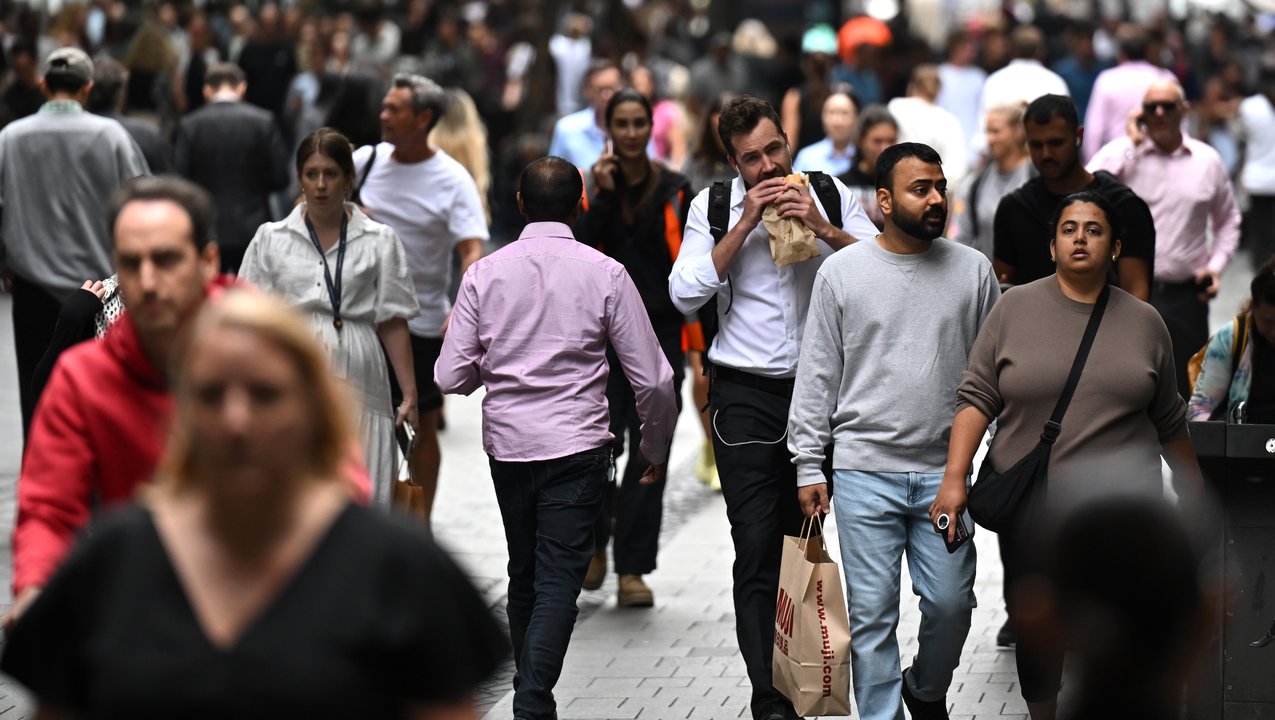
NAB predicts the unemployment rate to remain at a relatively low 4.3 per cent, with an extra 25,000 jobs expected to be added to the economy.
While the Reserve Bank still believes the labour market is on the tighter side, an unemployment rate at 4.3 per cent would ease some concerns the jobs market is re-tightening, the NAB economists said in a research note.
As the labour market was in decent shape heading into the war, it gives the central bank more leeway to raise interest rates and tackle inflation before having to worry about threatening the full employment side of its dual mandate.
“For the RBA … the immediate focus is on the local inflation outlook and risks around inflation expectations,” said Westpac economist Ryan Wells.
Ultimately, the biggest influence on inflation now is what happens to the Strait of Hormuz and how quickly that is passed through to Australian consumer prices.
The announcement last week that the Strait would open for two weeks during a ceasefire was welcome, said Westpac chief economist Luci Ellis.
But Iran shutting the vital supply route less than 24 hours later in response to Israeli attacks on Lebanon was less promising.
“Even if the ceasefire holds well enough that the Strait stays open, a key watchpoint is whether ships enter the Gulf during the next two weeks, not just whether those previously stuck there leave,” she said.
“If ships do not enter, the next wave of production will not be able to be shipped. If the ceasefire does not hold, the reprieve on fuel supply will be brief.”
While the labour market survey is the first “hard data” out in the field at the same time as the Iran war, high frequency “soft data” – notably dire consumer confidence surveys – indicate its impact on household spending and broader activity could be worse than first thought.
Anecdotally, substantial price rises in industries such as construction paint a similar picture.
The weekly ANZ-Roy Morgan index bounced back from a record low last week, following government fuel excise cuts saving consumers about 32 cents per litre.
The monthly Westpac-Melbourne Institute consumer sentiment survey for March will give another glimpse into household confidence on Tuesday.
NAB’s business survey, also on Tuesday, will likewise be closely watched, with confidence expected to decline and cost pressures tipped to rise.
Markets will hope to get a sense of what the RBA makes of all this when the bank’s deputy governor Andrew Hauser and chief economist Sarah Hunter hold speaking engagements in the US on Tuesday and Thursday.
Wall Street investors were on Friday pressing pause as they headed into the weekend while keeping an eye on ongoing Middle East peace negotiations.
US indexes closed mixed.

The Dow Jones Industrial Average fell 269.23 points, or 0.56 per cent, to 47,916.57, the S&P 500 lost 7.77 points, or 0.11 per cent and the Nasdaq gained 80.48 points, or 0.35 per cent.
Australian share futures jumped 70 points, or 0.77 per cent, to 11,023.
The S&P/ASX200 slipped 12.6 points on Friday, down 0.14 per cent, to 8,960.6, as the broader All Ordinaries lost 13.1 points, down 0.14 per cent, to 9,155.8.