
The major parties have learned to control the narrative at the expense of courage, with policy reduced to fragments, slogans, and lines tested for survival, not truth. Andrew Brown on why Labor is no longer the party of reform. Part 3 of 6.
Political retreat does not arrive with a speech or a surrender. It is learned. Then it becomes instinct.
Governments study their environment the way an animal studies an electric fence. First, they test it. Then they flinch before touching it. Eventually, they do not need the shock. They carry it inside themselves. What passes for caution is often nothing more than internalised fear.
Leaders learn quickly. Which words trigger outrage? Which reforms summon coordinated backlash? Which interests mobilise within hours? Which editors can turn hesitation into blood sport by breakfast?
Those lessons settle in early. Decisions are shaped before they are even spoken. Power begins censoring itself in advance, and Australia’s public decision-makers have refined it into an art form.
Media concentration
We have one of the most concentrated media systems in the democratic world. Ownership is narrow. Voices repeat. Narratives harden fast.
News is compressed into outrage, reaction, and spectacle.
Politics does not resist this machine. It adapts to it. What survives is not depth, courage, or clarity. It is speed, caution, and performance. Complexity is punished. Truth is shaved down until it fits the headline.
There is no need for conspiracy; it’s more efficient than that. It is structural.
Policy is not shaped only by what is right or necessary, but by what will survive the next twenty-four hours of media exposure. Language is softened before it is spoken. Reform is diluted before it is announced. Ambition is cut to a size that will not provoke the pack, and over time, that becomes habit.
Progressive policy is framed as fantasy. Redistribution becomes theft. Equality is reduced to resentment dressed up as policy. Any challenge to entrenched power is met with the same tired threats: markets will panic, capital will flee, the centre will collapse. The point is not to win the argument.
The point is to make sure the argument is never worth having.
So governments retreat.
Creating consent
Outrage culture accelerates the decay. Debate starts taking its cues from the loudest voice, not the strongest argument. Volume replaces substance. Fury replaces evidence, nuance is treated as weakness, and explanation is treated as risk. Politics stops trying to convince and starts trying to avoid damage.
It becomes theatre.
Once, leaders understood the opposite instinct. Hawke and Keating did not hide from hostile media. They walked straight into it. They spoke directly to the public about difficult reforms and real tradeoffs. They argued their case. They explained it again. Then again. Until people understood not just what was happening, but why.
That mattered because it created consent. It treated the public as adults. It built authority through clarity, not choreography. You did not need to agree with them to recognise they were in command of their decisions.
Rudd, in his own way, did the same. Overbearing at times, relentless in detail, but unmistakably in control. He explained systems, policy, and consequence with precision. You could oppose him. You could not dismiss him.
Clarity creates authority.
Today, explanation is treated like exposure. Ministers avoid unscripted settings. Serious interviews are rationed.
Policy is reduced to fragments, slogans, and lines tested for survival, not truth.
When leaders refuse to explain themselves, the vacuum fills immediately with distortion and cynicism, and something more corrosive happens.
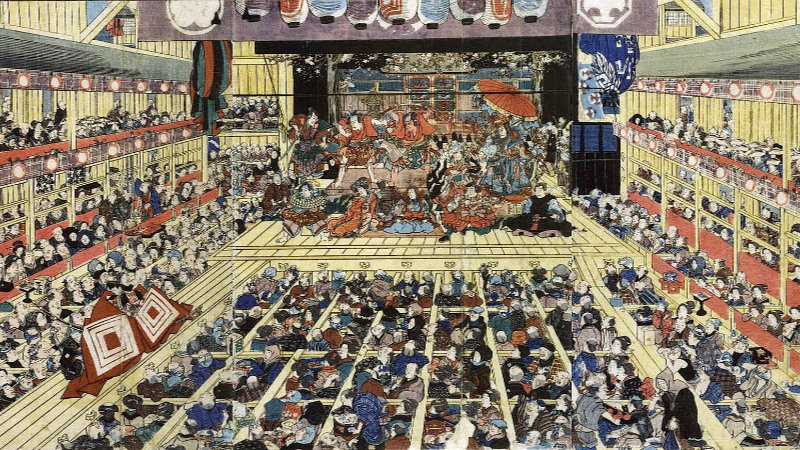
Kabuki politics
They do not speak with authority. They do not own their portfolios. Communication is centralised, scripted, and controlled to the point of paralysis. The Prime Minister becomes the only authorised voice. Everyone else recites.
What remains is a cabinet in name and a stage in practice.
Australians are shown carefully managed press conferences where the Prime Minister speaks and ministers stand behind him like props. Silent. Nodding. Diminished. The person responsible for the policy looks like they need permission to exist, let alone explain it.
This is not communication, it’s Kabuki politics.
It signals control, but reveals fear. Governments confident in their authority do not need this level of management. Prime ministers who trust their ministers do not arrange them like scenery. They expect them to defend policy, carry responsibility, and withstand scrutiny in public.
That is what cabinet government is supposed to be, but what we have is something else.
When politics becomes stagecraft, substance drains out of it. When explanation disappears, trust follows. When ministers stop speaking, accountability dissolves. Everyone is present. No one is responsible.
Lobbying completes the system.
The most powerful interests rarely need to win publicly. Their victories happen earlier than that. They shape the limits of what can be said, proposed, or even imagined. The argument is narrowed before it begins, the boundaries are drawn in advance, and power learns those boundaries. Then it stays inside them.
This is how democracies contract without announcing it. Not through bans, but through anticipation. Not through force, but through adjustment. Governments begin disciplining themselves. Ideas are abandoned before they are tested. Reforms are softened before they are written. Decisions are delayed until the moment requiring courage has passed.
Retreat becomes routine
Not one decision, but thousands. Not open cowardice, but accumulated deference.
Not failure of capacity, but fear of consequence.
The gatekeepers do not need to shout. They do not even need to appear. Power already knows where the fences are, and it no longer tries to cross them.