
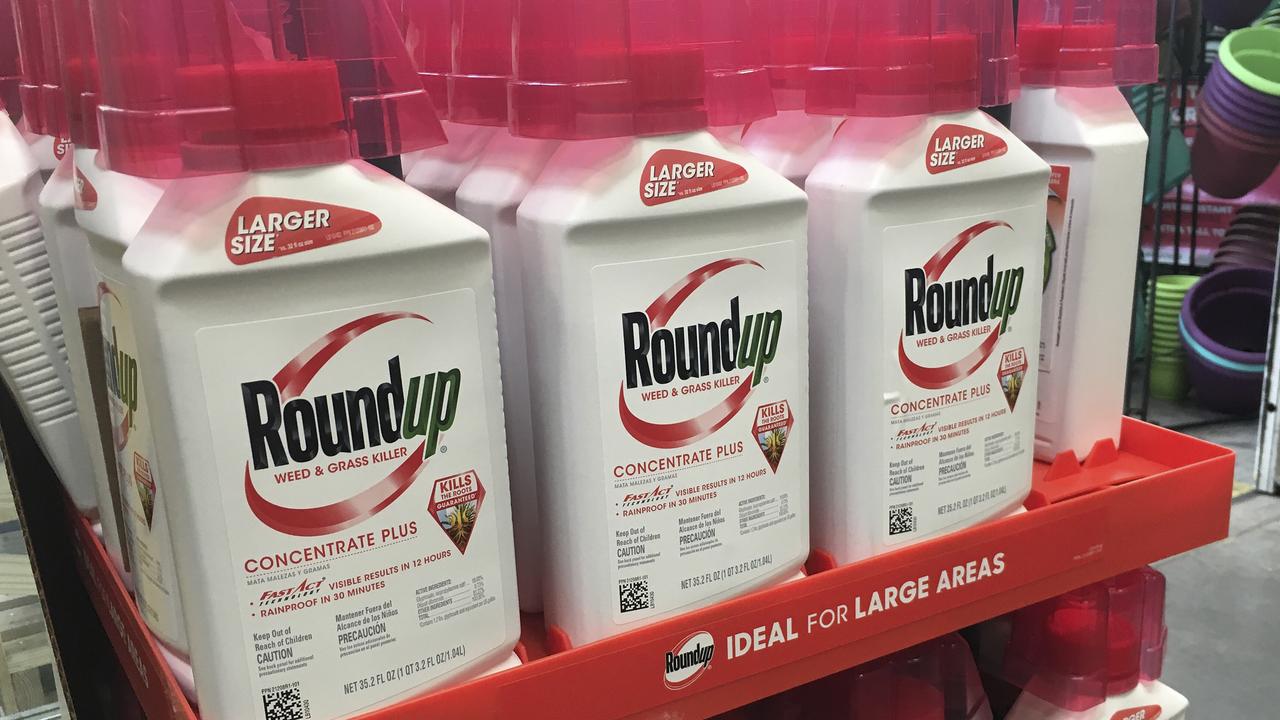
Agrochemical maker Bayer and lawyers for cancer patients announced a proposed $US7.25 billion ($A10.26 billion) settlement to resolve thousands of US lawsuits alleging the company failed to warn people that its popular weedkiller Roundup could cause cancer.
The proposed settlement on Tuesday comes as the US Supreme Court is preparing to hear arguments in April on Bayer’s assertion that the US Environmental Protection Agency’s approval of Roundup without a cancer warning should invalidate claims filed in state courts. That case would not be affected by the proposed settlement.
But the settlement would eliminate some of the risk from an eventual Supreme Court ruling.
Patients would be assured of receiving settlement money even if the Supreme Court rules in Bayer’s favour. And Bayer would be protected from potentially larger costs if the high court rules against it.
Germany-based Bayer, which acquired Roundup maker Monsanto in 2018, disputes the assertion that Roundup’s key ingredient, glyphosate, can cause non-Hodgkin lymphoma.
But the company has warned that mounting legal costs are threatening its ability to continue selling the product in US agricultural markets.
“Litigation uncertainly has plagued the company for years, and this settlement gives the company a road to closure,” Bayer CEO Bill Anderson said.
The proposed settlement was filed in St Louis Circuit Court in Missouri, home to Bayer’s North America crop science division and the state where many of the lawsuits have been brought. The settlement still needs the court’s approval.
More than 125,000 plaintiffs have lodged legal claims over Roundup since 2015, according to the settlement documents.
Few have gone to jurors, with 13 verdicts for Bayer and 11 for plaintiffs, including a $US2.1 billion ($A3 billion) award by a Georgia jury last year.
Others already have been resolved through separate settlements, including two recent ones that would take care of about 77,000 of the claims.
The newly proposed nationwide settlement is designed to address most of the remaining lawsuits, as well as any additional cases brought in the coming years by people who were exposed to Roundup before Tuesday.
If too many plaintiffs opt out of the proposed settlement, Bayer said it reserves the right to cancel it. But Bayer did not specify how many opt-outs would have to occur.
The deal calls for Bayer to make annual payments into a special fund for up to 21 years, totalling as much as $US7.25 billion.
The amount of money paid out to individuals would vary depending on how they used Roundup, how old they were when diagnosed and the severity of their non-Hodgkin lymphoma.
An agricultural, industrial or turf worker exposed at length to Roundup would receive an average of $US165,000 ($A233,594) if they were diagnosed with an aggressive form of the illness while younger than age 60, according to the proposed settlement.
Meanwhile, a residential Roundup user diagnosed between the ages of 60-77 with a less aggressive form of the illness would receive an average of $US20,000 ($A28,314).
“No settlement can erase a diagnosis, but this agreement is designed to ensure that both today’s and tomorrow’s patients have access to meaningful compensation,” said lawyer Christopher Seeger, who would represent current claimants under the settlement.
President Donald Trump’s administration has weighed in on Bayer’s behalf, reversing the position of former President Joe Biden’s administration and putting it at odds with some supporters of the Make America Healthy Again agenda who oppose giving the company the legal immunity it seeks.
The company simultaneously has been lobbying state legislatures to shield pesticide manufacturers from state failure-to-warn lawsuits when their products follow federal labelling requirements.