

More than one million households and businesses have swapped old copper for new fibre connections since NBN Co announced plans to ditch the technology, with many of the upgrades in regional areas.
The change, along with the release of updated plans, boosted the nation’s average broadband speeds and downloads to record levels, with almost one-in-three premises connected at 500 megabits per second or faster.
NBN Co revealed the changes with its half-year financial results on Thursday, where it also announced its revenue had grown to $2.94 billion during the period and it posted a smaller loss before tax of $350 million.

The announcements come a year after the federal government invested an additional $3 billion in the National Broadband Network to upgrade legacy copper connections, with NBN Co contributing $800 million to the project.
More than 287,000 households and businesses had taken the fibre upgrade offer in the six months to December 2025, NBN Co chief executive Ellie Sweeney said, representing a 32 per cent jump compared to last year.
“Australians are choosing full fibre at an impressive rate, with more than 47,000 upgrades completed each month and every month over the past year,” she said.
“Importantly, 26 per cent of upgrades were in regional areas and we’re bringing world-class connectivity to even more Australians.”
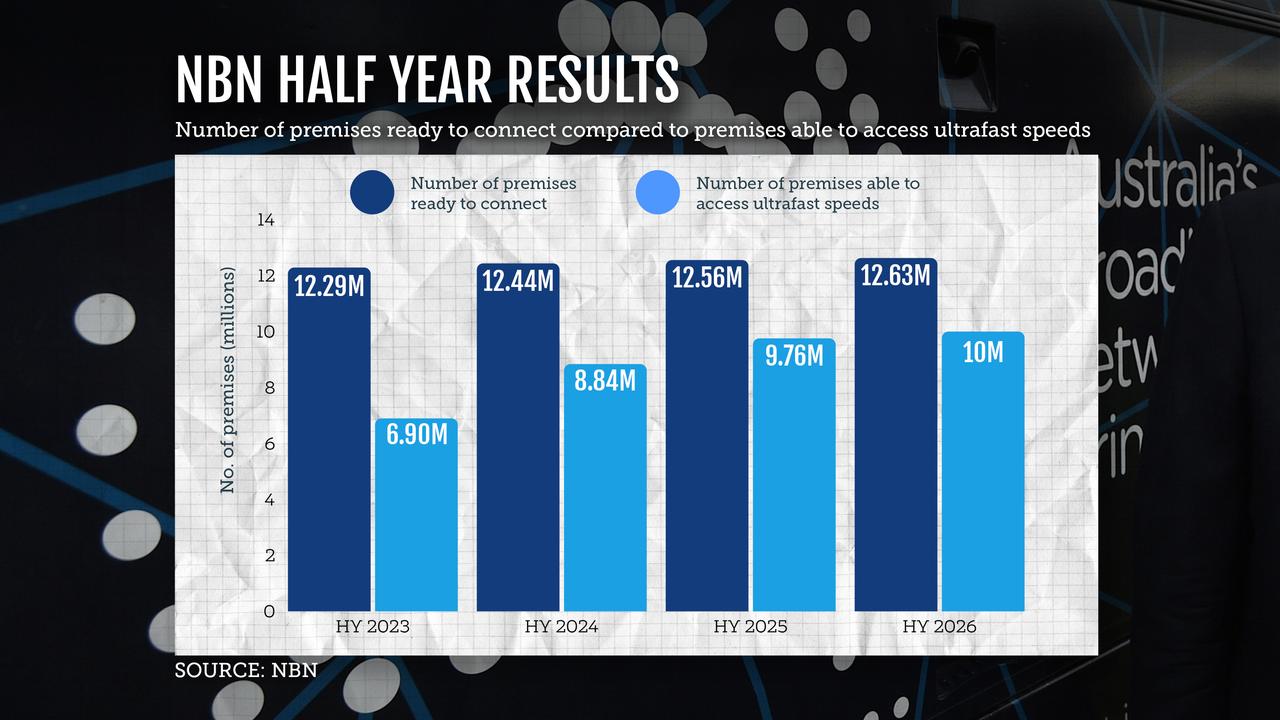
The Fibre Connect program, which replaced copper with faster and more reliable fibre optic technology, was on track to be completed by the end of 2030, she said.
The network’s growing fibre backbone had already lowered NBN Co’s operating expenses, Ms Sweeney said, as it required less maintenance than the older, less weather-resistant technology.
A program offering broadband plan upgrades, launched in September, also delivered speed boosts, with two-in-five premises (41 per cent) accessing 100 megabit per second download speeds, and almost one in three (31 per cent) using services at 500mbps or more.

Average downloads also increased by 65 gigabytes per month or 13 per cent during the period, Ms Sweeney said, with NBN users downloading an average of 557GB each month.
“This is important because it demonstrates a simple fact: when Australians can access higher speeds at better value, they do not just upgrade, their usage expands and demand keeps rising,” she said.
“It’s allowing Australian homes and businesses to stay ahead of the curve and handle data demands of today and also the years to come.”
The upgrades and price increases pushed up residential spending by $3 a month to $52 and raised NBN Co’s telecommunications revenue by four per cent, while its total revenue rose by two per cent.
The company’s capital expenditure dropped by 22 per cent during the six months, mainly due to the completion of fixed wireless and satellite upgrade programs.
More than 8.6 million premises are actively connected to the NBN – a figure that rose by 0.3 per cent over the past year.