
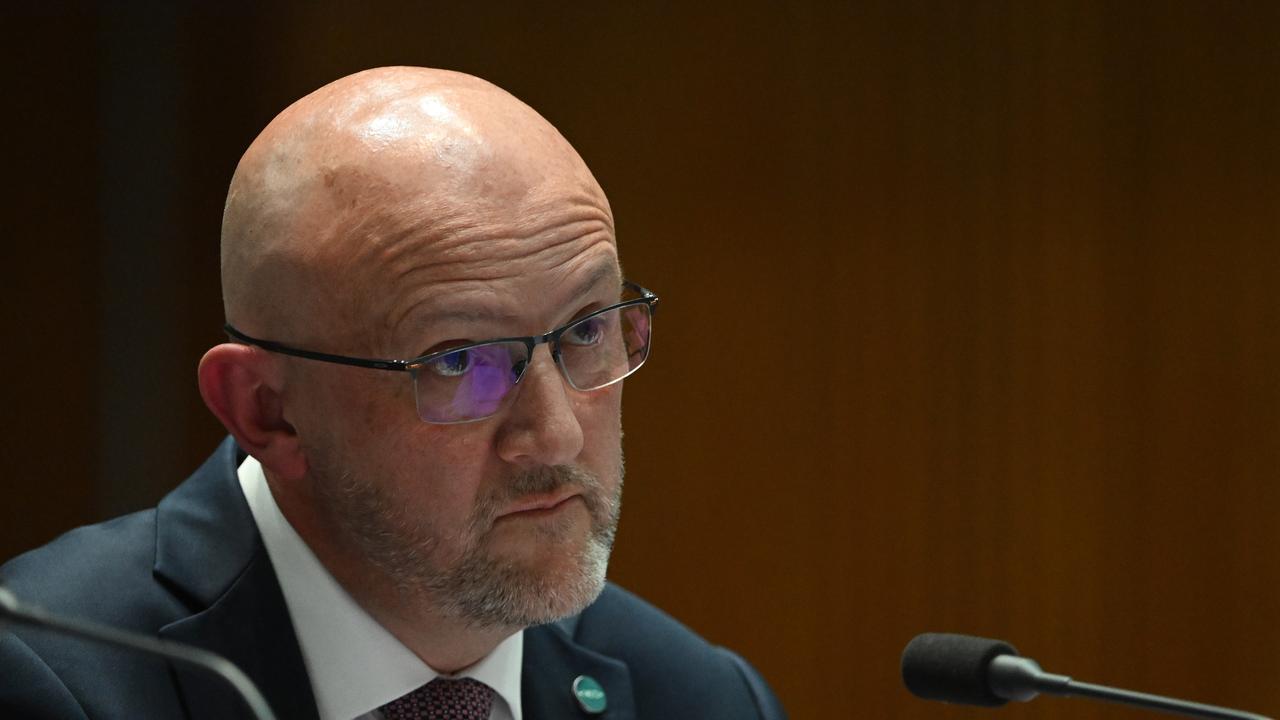
Australia’s spy chief says his agency will own any mistakes following Bondi’s anti-Semitic terrorist attack as he revealed an external investigation cleared ASIO’s review of one of the gunmen in 2019.
Naveed Akram and his father, Sajid, killed 15 innocent people and wounded dozens more during a shooting massacre at Bondi Beach in December during a Jewish Hanukkah festival.
Law enforcement alleges they were inspired by Islamic State ideology.
The father was shot dead by police at the time while the son faces terrorism and murder charges.
ASIO director general Mike Burgess said while ASIO and law enforcement partners had disrupted 28 major terrorism plots since September 2014, Australia’s intelligence agencies couldn’t catch everything.
He said the attack weighed heavily on him and his officers but this didn’t mean intelligence was ignored or people made mistakes.
“The grim reality is, as I’ve said many times, ASIO is not all-seeing and all-knowing, we cannot stop every terrorist, just as we cannot catch every spy,” Mr Burgess told a parliamentary hearing on Tuesday night.
“It appears the alleged terrorists demonstrated a high level of security awareness to hide their plot. In simple terms, they went dark to stay off the radar.
“If ASIO is found to have made mistakes, we will own them, and we will learn from them.”
The director general said an external investigator had “unfettered and unfiltered access” to the agency to review whether there were any intelligence shortcomings.
It follows the younger Akram having come across ASIO’s radar in 2019 due to his association with others, but the then-teenager wasn’t deemed to present any ongoing threat.
Mr Burgess said the highly classified review into his agency following the Bondi attack reaffirmed ASIO’s actions in 2019.
“I can say that we stand by our 2019 assessment the Akrams did not adhere to or intend to engage in violent extremism at that time,” he said.
“In other words, many of the claims and criticisms being made about ASIO’s handling of the case are baseless.”
His public comments following an ABC Four Corners program aired on Monday, during which a former ASIO agent claimed he shared intelligence about Naveed’s radicalisation with the agency in 2019.
ASIO said it investigated the information but couldn’t substantiate it.
The intelligence agency further denied accusations that it failed to act on the former agent’s intelligence, saying his comments to the ABC were untrue, as he had attributed things to Naveed that were said and done by another person.
Mr Burgess also cautioned against applying hindsight.
“Things that might appear obvious in retrospect may not have been obvious at the time, and when individuals made decisions in one context, it may not be fair to judge them in a different context,” he told senators in the Tuesday hearing.
“In the days and weeks after the Bondi attack, assumptions, assertions, hypotheticals and opinions quickly became accepted as facts by some.
“They were recycled and exaggerated in the following weeks. This resulted in calls for action that were not supported by any fact.”