
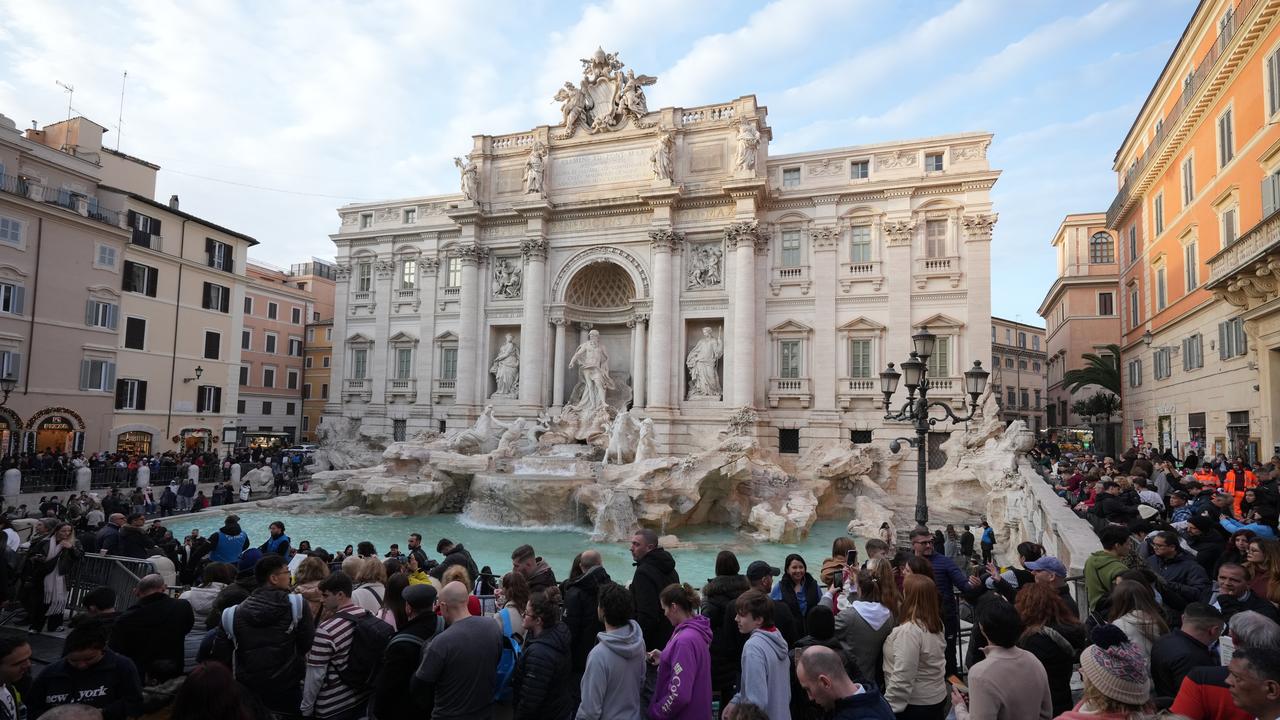
Tourists who want to get close to Rome’s Trevi Fountain will soon have to pay a fee, the city mayor says, as authorities look to profit more handsomely from Italy’s many attractions.
Mayor Roberto Gualtieri told reporters tourists will be charged two euros each ($A3.5) from February 1, adding that the measure was expected to raise 6.5 million euros ($A11.5 million) a year.
“Two euros isn’t very much … and it will lead to less chaotic tourist flows,” Gualtieri said, stressing that citizens of Rome will continue to have free access to the fountain.
Tourists will have to pay if they want to get onto the stone steps surrounding the fountain’s basin, while the small surrounding square offering a view of the imposing monument will remain open for everyone.
The Trevi Fountain, where tradition dictates that visitors toss a coin into the water to guarantee their return to Rome, has long been a major tourist attraction, even for visiting world leaders.
Completed in 1762, the monument is a late Baroque masterpiece depicting Oceanus, the god of all water, and symbolising the varying moods of the world’s seas and rivers.
It has received nine million visitors so far this year, Gualtieri said, suggesting that he expects many people will opt to view the fountain from afar in future, rather than pay to get near the water.
Visitors on Friday said they would be willing to pay if the money was put to good use.
“If it means that money is used to keep it maintained, then yeah, that’s fine,” said British tourist Yvonne Salustri.
Gualtieri said five other relatively unknown sites in Rome that are currently free will start charging five euros for access from February, continuing the recent trend aimed at squeezing profits from Italy’s cultural heritage.
In 2023, a five-euro entrance fee was introduced for Rome’s ancient Pantheon. As a result the square outside is often crammed with people waiting for their turn to pay and enter.
Venice has introduced a tourist entry-fee system during the peak travel season, while Verona this month began charging for access to the balcony in the northern Italian city that is associated with Shakespeare’s “Romeo and Juliet”.